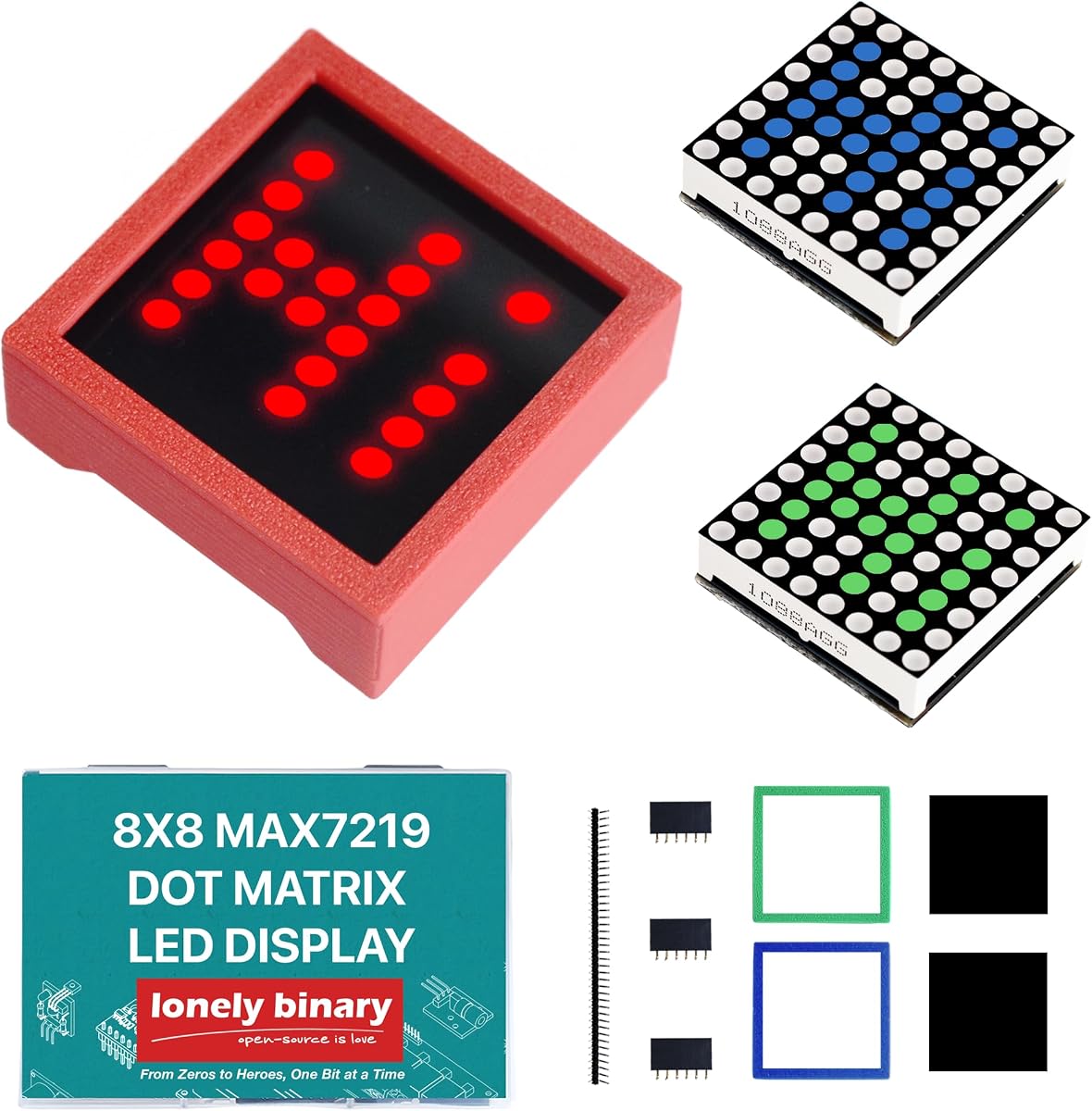
Lonely Binary 8×8 Matrix
4.7Editor score
Three color options
3D printed enclosures
MAX7219 driver included
This guide compares the top LCD Dot Matrix Modules for visibility clarity integration and value helping you choose the best display for your electronics
LCD Dot Matrix Modules are essential components for displaying text and graphics in embedded systems. They offer reliable visibility and easy interfacing for makers and engineers alike.
We evaluated ten top products based on resolution contrast backlight quality and compatibility with common microcontrollers like Arduino and ESP32 to build this curated list.
Each pick shows key features and real-world performance. Please note that prices and availability change frequently so check the latest details before purchasing your next module.
4.7Editor score

4.1Editor score

4.5Editor score
The following table provides a side-by-side comparison of all ten selected LCD Dot Matrix Modules highlighting their key specifications and unique selling points for quick reference.




The Ximimark 12864 stands out as a reliable choice for graphic display needs with its 128×64 dot matrix resolution and blue backlight for high contrast visibility.
We may earn a commission when you buy through this link, at no additional cost to you.
It features an integrated potentiometer for easy contrast adjustment and comes with an Arduino library that simplifies the development process for hobbyists and professionals alike.
While it is limited to 5V operation and has a basic bezel the dimmable backlight and solid performance make it a strong contender for most embedded display tasks.
Anyone needing a straightforward graphic display with minimal setup will find this module delivers consistent results at a very accessible price point for projects.
The included Arduino library and examples reduce coding time allowing users to focus on application logic rather than low-level display drivers.
The dimmable LED backlight and potentiometer allow users to optimize screen visibility for various ambient lighting conditions without external components.
We may earn a commission when you buy through this link, at no additional cost to you.
This generic 12864 module offers a wide viewing angle and high contrast making it a solid choice for applications requiring clear visibility from different positions.
We may earn a commission when you buy through this link, at no additional cost to you.
It is perfectly compatible with popular boards like the Mega 2560 and Nano Due providing flexibility for various microcontroller setups without additional adapters.
The inclusion of 1×20 pin headers simplifies connection to breadboards or PCBs though the lack of specific rating data suggests checking seller feedback before bulk orders.
For users prioritizing angle and compatibility over branded support this module provides the essential features needed for standard graphic display integration.
Support for multiple controller boards ensures this module can fit into existing designs without requiring significant hardware modifications or logic changes.
The included 1×20 pin headers reduce the need for soldering allowing for faster prototyping and easier initial testing phases for new users.
We may earn a commission when you buy through this link, at no additional cost to you.
This two-pack of 1602 LCD modules provides excellent value for projects requiring multiple text displays with each unit showing 16 characters across two lines.
We may earn a commission when you buy through this link, at no additional cost to you.
Operating between -20 and 70 degrees Celsius it ensures reliability in varied environments while the parallel interface simplifies direct connection to controllers.
The absence of dimming features limits indoor flexibility but the standard layout makes it easy to implement in many existing codebases and libraries.
Projects needing multiple simple text interfaces like sensor readouts or status panels will benefit significantly from this cost-effective dual pack solution.
Buying two modules in one pack reduces overall cost per unit which is ideal for larger scale deployments or educational classroom settings.
The wide operating temperature range ensures the display remains functional even in environments with significant thermal fluctuations or outdoor use cases.
We may earn a commission when you buy through this link, at no additional cost to you.
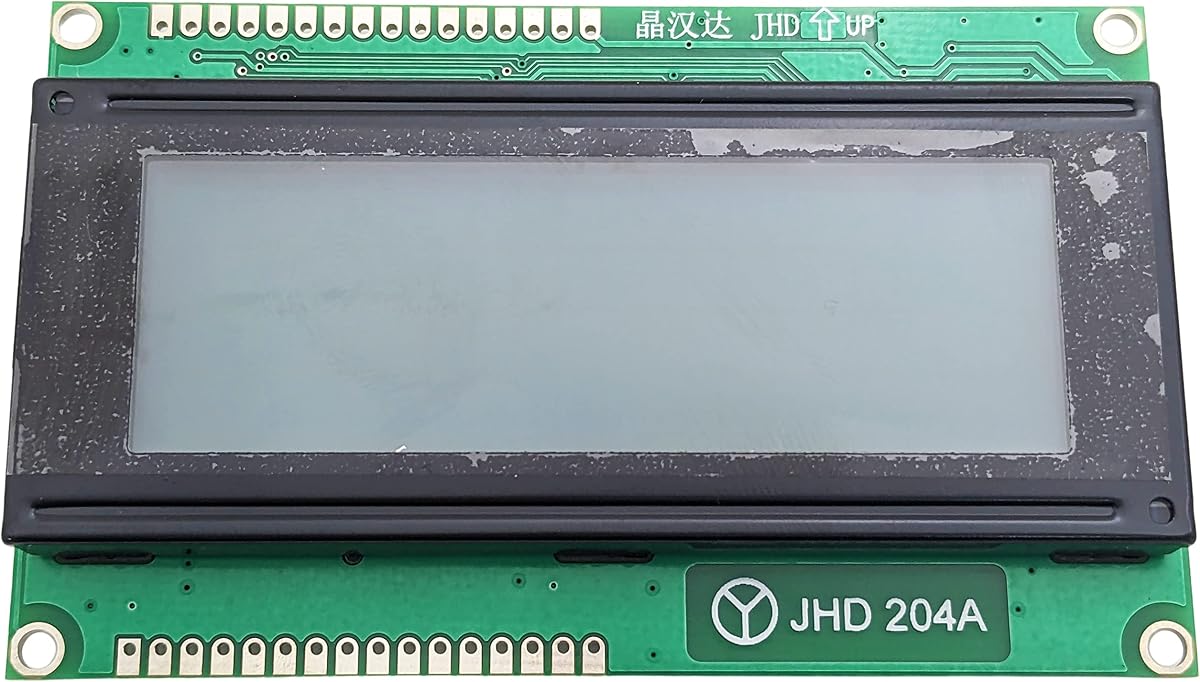
The Electronix Express 20×4 module offers four lines of text display which is ideal for projects requiring more information than standard 16×2 screens provide.
We may earn a commission when you buy through this link, at no additional cost to you.
With a driver and controller included the setup is streamlined and the 5×7 dot matrix ensures legible characters across the entire screen surface.
Its compact dimensions make it suitable for space-constrained designs though users should note it uses a reflective positive gray interface rather than a backlight.
For applications prioritizing text capacity and simplicity without the need for backlighting this module delivers a reliable and cost-effective solution for developers.
The 20×4 format allows for four times the line capacity of a 16×2 module enabling complex menus or longer data strings to be displayed.
Having the driver and controller onboard removes the need for external chips simplifying the circuit board design and reducing potential points of failure.
We may earn a commission when you buy through this link, at no additional cost to you.
This three-pack of 8×8 LED matrices includes red green and blue options with MAX7219 drivers making it perfect for colorful scrolling text and status indicators.
We may earn a commission when you buy through this link, at no additional cost to you.
The included 3D-printed enclosures give each module a finished look protecting from dust and adding a professional aesthetic to desktop or embedded builds.
Basic soldering is required to connect pin headers but the daisy-chain design allows for building wider displays without complex wiring or additional controllers.
Hobbyists and classrooms will appreciate the open-source design and sample code which provide a strong starting point for various creative electronics projects.
Having three distinct colors allows users to create layered visual effects or status indicators without needing full RGB modules which cost significantly more.
The PLA cases protect the circuitry and provide mounting options reducing the need for custom 3D printing by the end user saving time and effort.
We may earn a commission when you buy through this link, at no additional cost to you.
The HiLetgo MAX7219 module provides a reliable 8×8 dot matrix display that operates at standard 5V and uses a simple 5pin interface for microcontroller connections.
We may earn a commission when you buy through this link, at no additional cost to you.
Each module drives 64 common cathode LEDs individually allowing for detailed pixel control and customizable display patterns for various visual feedback needs.
While it lacks the enclosures of premium kits the fixing screws and hole pattern facilitate easy panel mounting for projects requiring a semi-permanent installation.
Developers looking for a straightforward LED matrix component that integrates easily with existing libraries will find this module a dependable choice for prototyping.
The 5pin line simplifies connection to common microcontrollers reducing wiring complexity and minimizing the chance of incorrect pin configuration errors.
Included fixing screws and 3mm holes allow for secure panel installation ensuring the module stays in place during movement or vibration.
We may earn a commission when you buy through this link, at no additional cost to you.
This MAX7219 module is optimized for 8-digit numeric display making it ideal for clocks counters and digital gauges requiring clear numerical readouts.
We may earn a commission when you buy through this link, at no additional cost to you.
The serial SPI interface allows seamless connection to microcontrollers while BCD decoding simplifies the process of converting numbers to visible segments automatically.
Features like adjustable brightness and low power shutdown mode ensure efficient operation and flexibility for both battery-powered and constant power applications.
Users needing precise numeric control without the complexity of full graphics will find this module offers the right balance of functionality and simplicity for their use.
Supporting both automatic digit encoding and manual programming gives users flexibility to choose the most efficient method for their specific application needs.
The 150μA shutdown mode and analog/digital brightness adjustments help maintain energy efficiency which is critical for portable or battery-dependent systems.
We may earn a commission when you buy through this link, at no additional cost to you.
The SunFounder LCD2004 offers a generous 20×4 character display with white text on a blue background ensuring high visibility and readability in various lighting conditions.
We may earn a commission when you buy through this link, at no additional cost to you.
Its adjustable contrast potentiometer allows users to fine-tune the display clarity and the bright backlight ensures characters remain clear even in bright environments.
While the module dimensions are larger than standard 16×2 displays this extra space allows for more detailed information display without the need for scrolling text.
Projects requiring clear detailed text interfaces like industrial panels or advanced hobbyist menus will benefit from the premium build quality and reliable performance.
The white on blue color scheme is designed to provide high contrast which reduces eye strain and improves legibility for extended viewing sessions.
The 50K potentiometer allows users to adjust the display contrast easily without external controls ensuring optimal visibility in any specific lighting condition.
We may earn a commission when you buy through this link, at no additional cost to you.
This three-pack of 32×8 LED matrices provides a wide display area perfect for scrolling messages music visualizers and large pixel art animations.
We may earn a commission when you buy through this link, at no additional cost to you.
The MAX7219 driver simplifies control and the daisy-chain design allows you to connect multiple modules for even wider displays with minimal complexity.
Included 3D-printed enclosures protect the modules and add a finished look which is especially useful for desktop or embedded installations where aesthetics matter.
Projects requiring wide scrolling text or large visual feedback will find this module offers the necessary space and connectivity options for creative implementation.
The 32×8 resolution allows for longer scrolling text and broader graphics making it ideal for message tickers and game graphics without chaining multiple 8×8 units.
Compatibility with ESP32 Raspberry Pi Pico and STM32 ensures this module fits into a wide range of modern microcontroller ecosystems and projects.
We may earn a commission when you buy through this link, at no additional cost to you.
This two-pack of 4-in-1 modules offers a compact 128mm footprint with 64 mounting holes making it easy to secure into various panel and enclosure designs.
We may earn a commission when you buy through this link, at no additional cost to you.
The 5-pin SPI interface supports daisy-chaining for expanded display configurations and the common cathode control allows for precise LED addressability and custom patterns.
Designed for standard 5V systems these modules integrate seamlessly with Arduino and similar microcontrollers providing a reliable solution for LED matrix applications.
Projects needing multiple modules for a larger display will benefit from the dual-pack pricing and the flexible mounting options for secure installation.
The ability to daisy-chain these modules means you can expand your display width significantly without needing extra controllers or complex wiring setups.
64 pre-drilled holes ensure the module can be mounted securely into custom enclosures reducing the risk of vibration issues or movement in handheld devices.
We may earn a commission when you buy through this link, at no additional cost to you.
Selecting the right module depends on your project needs display size requirements and control complexity.
Resolution determines how much information you can show at once. Graphical modules like 128×64 allow for custom images while character modules like 16×2 or 20×4 are better for text.
Choose a resolution that matches your content needs without overcomplicating the code or hardware interface.
Some modules use parallel interfaces which require more GPIO pins while others use serial protocols like SPI or I2C which save space and simplify wiring.
Check your microcontroller's available pins to ensure the module will connect without extra hardware or complex wiring.
Backlighting improves visibility in low-light environments but can consume more power. Contrast control via potentiometer helps optimize readability.
Prioritize modules with adjustable contrast if you need to use them in varying lighting conditions.
Most modules operate at 5V but some support 3.3V logic levels. Ensure the module matches your controller's voltage to avoid damage.
Verify voltage requirements to ensure compatibility with your existing power supply and microcontroller logic levels.
Physical size matters for fitting into enclosures or panels. Some modules include holes or brackets for easy mounting.
Measure your available space carefully and choose a module that fits your mechanical constraints without custom modifications.
Modules with built-in drivers simplify control logic. For LED matrices, driver chips like MAX7219 handle multiplexing internally.
Select modules with integrated drivers to reduce CPU load and simplify your code structure.
Official libraries or community support can reduce development time significantly. Check if the manufacturer provides code examples or documentation.
Modules with active community support or official libraries make troubleshooting easier for complex projects.
LED matrices typically consume more power than LCDs. If battery power is key consider modules with low-power modes or efficient drivers.
Estimate total power needs and ensure your power supply can handle the load comfortably.
Begin by identifying the correct pinout for your module and connecting the power supply matching the specified voltage levels.
Install any required libraries in your development environment to handle the display logic efficiently without low-level coding.
Avoid exposing the module to extreme temperatures or moisture and handle it by the edges to prevent damage to connectors.
Most modules listed operate at 5V so you need logic level converters for 3.3V boards. Some specific driver boards support 3.3V logic but verify the specs first.
Graphical modules let you draw pixels and images while character modules display pre-defined fonts. Choose based on whether you need images or simple text.
Most LCD modules have an on-board potentiometer. Turn the screw carefully to adjust the voltage and optimize screen readability.
Yes many LED matrix modules like MAX7219 have DIN and DOUT pins for chaining. You will need to configure the driver software to handle extended displays.
Popular options include Adafruit_GFX LCD LiquidCrystal for Arduino and built-in SPI libraries for LED matrices. Check documentation for compatibility.
These modules are output-only displays. For touch input you will need separate capacitive screens or buttons added to your project setup.
Flicker can be caused by unstable power or wiring interference. Use proper decoupling capacitors and ensure solid connections to the power supply.
Most are designed for indoor use. Outdoor deployment requires weatherproof enclosures and high-brightness modules rated for sunlight visibility.
We reviewed ten strong options ranging from text displays to LED matrices each with distinct strengths for different application types and budgets.
Prioritize compatibility resolution and control interface to ensure the module fits your microcontroller and project requirements without extra complications.
Always check current prices and availability before purchasing as stock levels change frequently in the electronics component market.