
Handheld Fish Finder Portable
4.2Editor score
Portable design with neck strap
200 kHz sonar frequency
Battery powered operation
Finding a reliable fishfinder on a budget can be challenging for many anglers. Modern technology has made it possible to access advanced sonar features without breaking the bank. This guide helps you navigate the options available in the current market.
We compared ten top-rated affordable fishfinders based on performance, ease of use, and durability. Our analysis focuses on essential features like display quality, sonar clarity, and battery life to ensure you get the best value for your investment today.
Each pick in this list highlights specific strengths and ideal use cases for different fishing styles. Prices and availability can change quickly, so check the current listings before making your final purchase decision for your next fishing trip.
4.2Editor score
4.6Editor score

4.7Editor score
As an Amazon Associate we earn from qualifying purchases.
This side-by-side comparison outlines the key specifications and capabilities of each selected fishfinder model to help you make an informed decision based on your specific fishing environment and budget constraints.


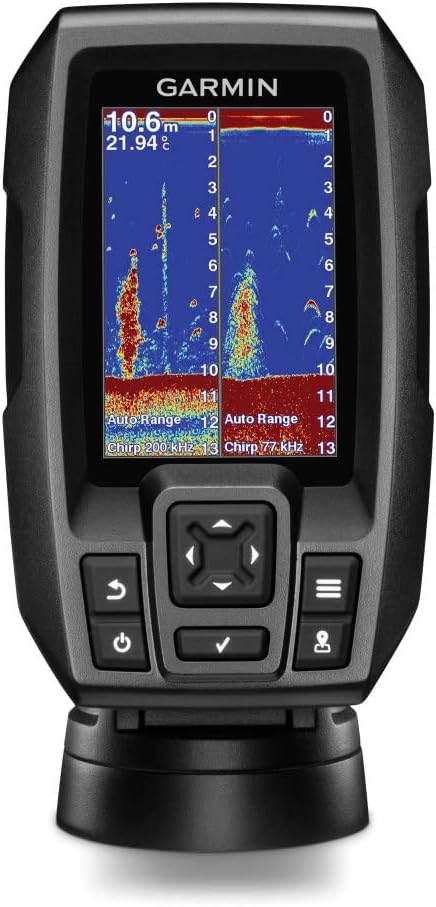
The Garmin Striker 4 stands out as a top contender in the affordable fishfinder market. With a solid rating of 4.6 stars, it offers a balance of performance and price that few competitors can match.
We may earn a commission when you buy through this link, at no additional cost to you.
Its Clear Vu scanning Sonar provides near photographic images, allowing you to see detailed representations of fish and structures. The CHIRP Sonar technology ensures crisper fish arches, which helps in identifying targets accurately.
While the 3.5 inch display is compact, it remains highly visible even in bright sunlight. The dedicated buttons make operation straightforward, reducing the time spent adjusting settings while you are out on the water.
This model is ideal for anglers who need reliable GPS navigation without spending a fortune. It is a versatile choice for both fresh and saltwater environments, offering great value for money in its class.
The CHIRP Sonar sends a continuous sweep of frequencies to create detailed images and better target separation for accurate fish identification.
Use the waypoint map to easily view and navigate to locations like brush piles and docks with the built-in GPS functionality.
We may earn a commission when you buy through this link, at no additional cost to you.
This handheld fish finder is perfect for anglers who prioritize portability above all else. Its compact design allows you to take it anywhere, making it a great tool for kayaks or shore fishing.
We may earn a commission when you buy through this link, at no additional cost to you.
Powered by standard AAA batteries, it lasts up to 5 hours of continuous use. The 200 kHz Sonar frequency provides accurate depth readings and helps detect fish size and location effectively.
While it lacks the advanced mapping of larger units, it delivers essential data like water depth and bottom contours. The neck strap adds convenience, allowing you to keep your hands free while fishing.
Ideal for casual anglers, this device offers a low entry point into sonar technology. It is a practical choice for those who need a simple, reliable tool without investing in a complex system.
The compact size and included neck strap let you carry the device easily while moving around a kayak or walking along the shore.
Just toss the transducer into the water and turn on the display to get immediate readings of depth and fish locations.
We may earn a commission when you buy through this link, at no additional cost to you.
The Vivid 4cv offers a premium experience at a competitive price point. Its 4-inch color display uses vivid palettes to distinguish fish and structure with exceptional clarity.
We may earn a commission when you buy through this link, at no additional cost to you.
Included Quickdraw Contours mapping allows you to view depth and bottom contours without needing an SD card. This feature is rare in this price range and adds significant value to the unit.
The CHIRP traditional sonar provides clear images and helps you find fish holding in structure. High-sensitivity GPS ensures that your waypoints are marked accurately for future visits.
If you want advanced mapping and color clarity without a high-end cost, this model is an excellent choice. It bridges the gap between basic units and high-performance systems effectively.
New vivid scanning sonar color palettes help you easily distinguish between fish, structure, and bottom contours at a glance.
Built-in Quickdraw Contours mapping provides immediate depth contours and bottom maps to help you navigate unfamiliar waters.
We may earn a commission when you buy through this link, at no additional cost to you.
Lowrance delivers a user-friendly experience with the Eagle Fish Finder. Its 4-inch IPS screen stays clear in bright sunlight, making it easy to view from wide angles or while wearing sunglasses.
We may earn a commission when you buy through this link, at no additional cost to you.
Auto-Tuning Sonar automatically adjusts settings so you can focus on finding fish rather than tweaking controls. This feature simplifies the setup process significantly for new users.
The included 200 kHz Bullet Skimmer provides broad coverage for small boats and kayaks. Simple fish icons with depth information make interpretation intuitive without needing complex analysis.
Ideal for those who prioritize ease of use, this model offers a streamlined fishing experience. Its twist-lock connector ensures secure attachment while allowing for quick removal when needed.
Sonar settings are optimized automatically to provide clear images without requiring manual adjustments from the user.
The IPS screen remains sharp and clear even under direct sunlight or through polarized sunglasses for consistent viewing.
We may earn a commission when you buy through this link, at no additional cost to you.
The PiranhaMAX 4 is known for its dual beam sonar that lets you choose between narrow detail or wide coverage. This flexibility helps identify fish and structure with precision.
We may earn a commission when you buy through this link, at no additional cost to you.
The tilt and swivel mount allows quick adjustments to your viewing angle, ensuring you can see the display clearly from different positions on the boat.
It includes a transom-mount transducer for stable performance in various water conditions. The 1-year limited warranty adds peace of mind for buyers concerned about durability.
This model is great for anglers who need a simple, effective tool for finding structure. Its rugged design makes it suitable for both freshwater and saltwater applications.
Choose from a narrow beam for detail or a wide beam for coverage to help identify fish and structure effectively.
The tilt and swivel mount allows you to adjust your viewing area angle quickly to suit your seating position.
We may earn a commission when you buy through this link, at no additional cost to you.
Designed for kayak anglers, this portable fish finder is compact and lightweight. It displays approximate fish location and water depth effectively for small boats or shore fishing.
We may earn a commission when you buy through this link, at no additional cost to you.
The fish alarm alerts you when schools pass by, saving you from constant monitoring. Five levels of sensitivity adjustment allow fine-tuning for different water conditions.
The display is visible in both sunlight and darkness thanks to the backlight function. It operates for 4-5 hours on brand new batteries, making it a reliable companion for a day out.
This device is a practical choice for casual fishing trips where weight and space are concerns. It offers essential functions without unnecessary complexity or bulk.
The device emits an alarm when fish or fish schools pass by the sensor area to alert you immediately.
Five levels of sensitivity adjustment make fishing possible both in clear water and turbid conditions.
We may earn a commission when you buy through this link, at no additional cost to you.
The Helix 5 Chirp GPS G3 is a powerful tool for serious anglers who need navigation capabilities. It features Dual Spectrum CHIRP Sonar for clear views of fish arches.
We may earn a commission when you buy through this link, at no additional cost to you.
Equipped with Humminbird Basemap, it covers 10,000+ lakes and coastlines. This built-in chartplotter functionality is invaluable for exploring new waters without additional costs.
AutoChart Live creates maps of depth contours while you are boating, allowing for custom mapping. The keypad control system ensures reliable operation even in challenging weather conditions.
Ideal for those who want top-tier navigation in a mid-range unit, this model offers great performance. It combines detailed sonar with robust mapping tools for a comprehensive experience.
Delivers views of fish arches and fish-holding structure with wide mode for coverage and narrow mode for detail.
AutoChart Live creates maps of depth contours and bottom hardness while boating to record your custom maps.
We may earn a commission when you buy through this link, at no additional cost to you.
This unit uses a wireless sonar sensor that you can cast up to 262 feet away. It eliminates the need to drill holes in your hull, making installation incredibly simple.
We may earn a commission when you buy through this link, at no additional cost to you.
The color LCD display lets you read data easily in bright sunlight or at night. It detects water depth, temperature, fish size, and bottom contour simultaneously.
With a range of 80 meters, you can explore different spots around your boat without moving. The rechargeable battery ensures you are ready for multiple fishing sessions.
Perfect for ice fishing or shore anglers, this portable design offers significant convenience. It provides essential data without complex setups or permanent modifications to your gear.
The wireless sonar probe can be cast onto water as far as you want without drilling holes in your boat hull.
Clear color display with selectable backgrounds enables you to read the screen in bright sunlight or at night.
We may earn a commission when you buy through this link, at no additional cost to you.
This fish finder features a 2.4 inch colorful LCD screen that makes reading data easy. It supports 21 operating languages, making it accessible for a wide audience of anglers.
We may earn a commission when you buy through this link, at no additional cost to you.
The sensor supports 147 feet depth detection with a 90-degree angle to cover a large area beneath your boat or kayak. It also includes a lamp sensor that attracts fish.
Fish alarm functions show the size and depth of passing fish on the screen. It is rechargeable, ensuring you have power for your entire trip without buying disposable batteries.
Ideal for those who want a clear view of the data, this model delivers a satisfying user experience. Its design makes it a versatile tool for kayak and river fishing.
The 2.4 inch colorful LCD screen supports 21 languages and shows fish icon with depth clearly.
The attractive lamp sensor automatically turns on when touching water to attract fish and make fishing easier.
We may earn a commission when you buy through this link, at no additional cost to you.
This device comes with two functional frequencies allowing you to fine tune its sonar readings without complexity. It provides a clear LED display with selectable black and white backgrounds.
We may earn a commission when you buy through this link, at no additional cost to you.
Both the receiver and sensor are rechargeable and work for about 6 hours on a single charge. This feature ensures long-lasting performance without the need for frequent battery replacements.
The sensor can be mounted on a boat or fishing rod, or floated to accessible areas for versatile fishing. It reads water temperature, fish size, and bottom contour effectively.
Great for anglers who want flexibility, this model offers multiple ways to position your sensor. It is a reliable choice for lake, kayak, and ice fishing scenarios.
Two functional airwave frequencies allow you to fine tune its sonar readings without complexity for clear data.
The receiver and sensor are both rechargeable and work for about 6 hours on a single charge.
We may earn a commission when you buy through this link, at no additional cost to you.
Selecting the right fishfinder depends on your specific needs, budget, and fishing style. This guide breaks down the key factors to consider before making your purchase.
The display is your primary interface for viewing sonar data. Larger screens with high resolution make it easier to distinguish fish and structures, especially in bright sunlight. Look for IPS or color screens if you often fish in varying light conditions.
Modern units use CHIRP or ClearVu technology to provide clearer images. CHIRP sends a continuous sweep of frequencies, creating crisper fish arches. Standard 200 kHz sonar works well for most recreational fishing but may lack detail in deep or murky water.
Built-in GPS helps you mark waypoints and navigate back to productive spots. Some budget models include basic maps like Quickdraw Contours. If you plan to explore new waters, a unit with enhanced GPS capabilities will save you time.
If you use a kayak or fish from shore, a handheld or castable unit might be best. Transom-mount units are ideal for boats. Consider the mounting bracket included with the unit to ensure it fits your setup securely.
Some fishfinders run on AAA batteries while others require rechargeable batteries or a boat power source. Rechargeable units reduce long-term costs and waste. Ensure the battery life aligns with your typical fishing trip duration.
Since you will be on the water, a waterproof rating like IPX7 is essential. This ensures the device can withstand splashes and rain without damage. Always check the rating before purchasing to avoid potential water damage.
Different models offer varying depth ranges from 328 feet to over 1,000 feet. Ensure the range suits your local waters. If you fish in deep lakes, prioritize units with a higher depth limit.
A user-friendly interface with dedicated buttons helps you focus on fishing. Look for models with auto-tuning features that adjust settings automatically. This minimizes the time spent configuring your device before casting.
To get the most out of your fishfinder, ensure the transducer is mounted securely below the waterline. For portable units, make sure the transducer floats horizontally and is fully submerged for accurate readings. Adjust the sensitivity settings based on water conditions to avoid clutter on the screen.
Maintain your device by rinsing it with fresh water after every use, especially if you have been in saltwater. Store the unit in a dry place when not in use to prevent moisture damage. Regularly check the battery levels and recharge or replace them as needed.
When fishing, experiment with different zoom levels to identify fish and structure. Use the alarm features to stay alert when fish are passing by. For models with mapping, take time to familiarize yourself with the waypoint functions to track your favorite fishing spots.
CHIRP sonar sends a continuous sweep of frequencies, whereas regular sonar sends a single frequency. This allows CHIRP to create crisper fish arches and better target separation, making it easier to distinguish between fish and structures. It generally provides more detailed images in various water depths.
Most of the units listed, such as the Garmin Striker 4 and Humminbird PiranhaMAX, are designed for both fresh and saltwater use. However, always check the specific waterproof rating and corrosion resistance. Always rinse the unit with fresh water after saltwater use to prevent damage.
Handheld units typically have a detection range of around 328 feet. While not as deep as boat-mounted systems, this is sufficient for many recreational anglers. If you frequently fish in deep waters, consider a boat-mounted unit with a higher depth capacity for better coverage.
Yes, all sonar fishfinders require a transducer to transmit and receive sound waves. Most units in this guide come with a compatible transducer. If buying a separate unit, ensure the transducer matches your boat's mounting style and depth requirements.
Yes, GPS functionality allows you to mark waypoints, create routes, and track your speed. This is especially useful for returning to productive fishing spots or navigating unfamiliar lakes. It adds significant value to your fishing experience without much extra cost.
Battery life varies by model. Handheld units using AAA batteries last around 4-5 hours. Rechargeable wireless units can last up to 6 hours on a full charge. Always check the specific battery life before purchasing to ensure it meets your trip needs.
First check if the batteries are installed correctly or if the unit needs recharging. Inspect the power cord and connections for any damage. If using a boat unit, verify that the power supply is connected properly. If these fail, consult the user manual for troubleshooting steps.
Yes, many of these units are designed with user-friendly interfaces and dedicated buttons. Models with auto-tuning features make it easy to start fishing without complex settings. Handheld units are particularly good for beginners who want an affordable entry into fishfinding technology.
Choosing a cheap fishfinder does not mean sacrificing essential features. The top picks in this guide offer a range of options from portable handheld units to advanced models with GPS and mapping capabilities.
Prioritize the features that matter most to you, whether it is screen quality, sonar clarity, or ease of use. Whether you are a kayaker or a boater, there is a budget-friendly unit that meets your needs.
Remember that prices change frequently, so check the current listings to ensure you are getting the best deal. Use this guide to make an informed decision and enjoy better fishing trips with reliable sonar technology.