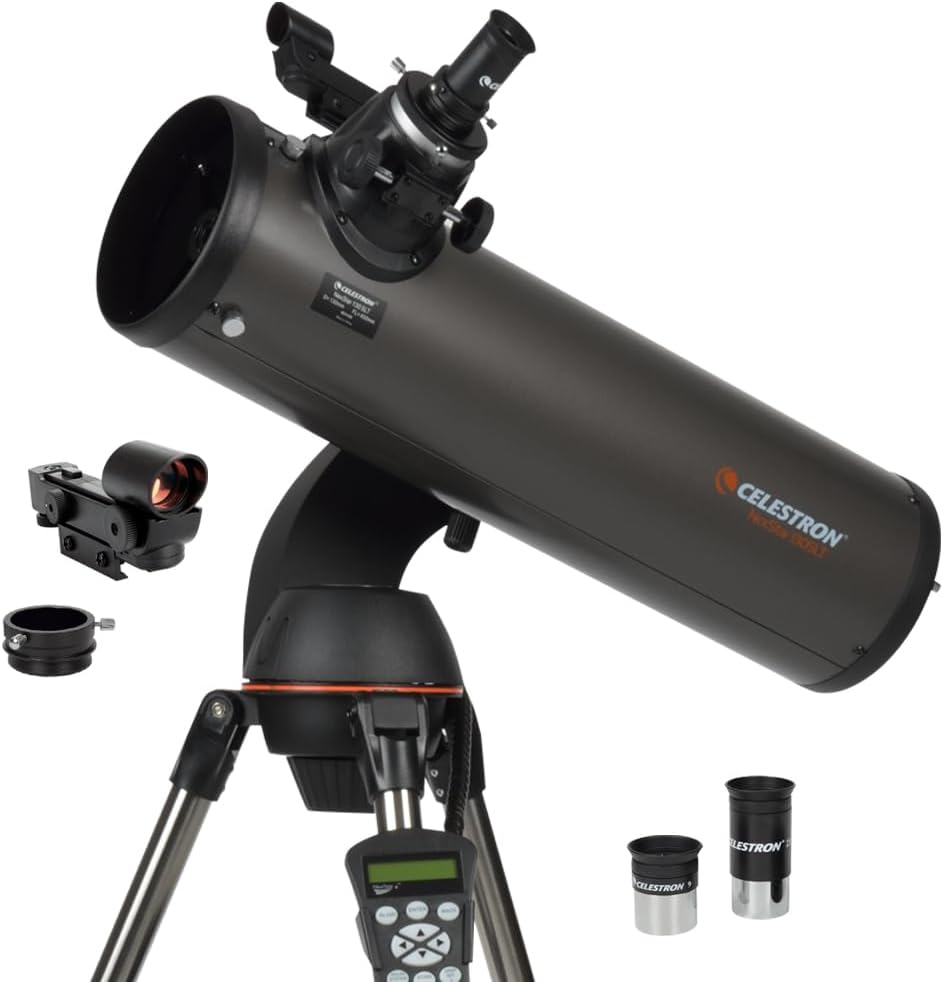
Celestron NexStar 130SLT Newtonian Reflector Telescope – Computerized GoTo
4.4Editor score
130mm aperture reflector
Compact portable design
Free Starry Night software
Computerized telescopes for adults transform how we explore the night sky by automating the search and tracking process. These advanced instruments use built-in motors and databases to locate celestial objects automatically. They are perfect for hobbyists who want to focus on observation rather than manual alignment and setup.
We evaluated ten leading models based on optical quality, mount stability, ease of use, and value. Each product offers unique features ranging from portable tabletop designs to heavy-duty equatorial mounts. Our analysis helps you find the right balance between performance and portability for your specific observing needs.
Every pick in this list includes detailed specifications and real-world performance insights. Prices and availability can change frequently so always check the latest listings before purchasing. Use this guide to confidently select a telescope that matches your astronomy goals and budget constraints.
4.4Editor score

4.3Editor score

4.4Editor score
As an Amazon Associate we earn from qualifying purchases.
The following table provides a side-by-side comparison of all ten selected computerized telescopes to help you quickly identify key differences in optics, mounts, and included accessories.




The Celestron NexStar 8SE stands out as a top choice for adults seeking a serious yet user-friendly telescope. It combines an iconic 8-inch optical tube with a robust computerized mount that automatically finds and tracks over 40000 celestial objects. This balance of aperture and automation makes it ideal for deep-sky viewing without requiring expert-level alignment skills.
We may earn a commission when you buy through this link, at no additional cost to you.
Its optical system reveals fine lunar craters, planetary cloud bands, and distant galaxies with clarity. The included NexStar+ hand control offers intuitive menus for selecting targets. SkyAlign technology ensures rapid setup by using any three bright stars for positioning. This eliminates the need for detailed star charts or polar alignment during casual sessions.
While the price is higher than smaller models, the optical performance justifies the investment. The tripod and mount are sturdy enough to handle the tube weight without excessive vibration. Some users note that battery life during extended sessions can be a factor, but this is standard for motorized systems.
This telescope is best for observers ready to upgrade from manual scopes. It serves both casual stargazers and intermediate astrophotographers who want a reliable platform. If you want detailed views of planets and nebulae without manual searching, this model delivers exceptional value.
The 8-inch aperture collects significantly more light than smaller scopes, allowing you to see fainter deep-sky objects clearly. This is crucial for observing distant galaxies and nebulae that remain invisible in smaller instruments.
Once aligned, the mount keeps objects centered in the eyepiece even as the Earth rotates. This frees you from constantly adjusting the telescope manually and lets you focus entirely on the view.
We may earn a commission when you buy through this link, at no additional cost to you.
The Celestron NexStar 130SLT offers an accessible entry point into computerized astronomy without sacrificing core functionality. It features a 130mm Newtonian reflector that provides crisp views of our solar system. The compact design makes it easy to carry to dark sky sites or set up on a balcony quickly.
We may earn a commission when you buy through this link, at no additional cost to you.
Its GoTo system locates objects from a database of over 4000 targets with precision. Users appreciate the SkyAlign feature that speeds up setup significantly. The included Starry Night software adds educational value by allowing sky simulation on your computer before going outside.
While it cannot match the light grasp of larger scopes, it excels in planetary observation. The Moon and planets like Jupiter appear detailed and bright. The trade-off is a less robust tripod that may vibrate more in windy conditions, but it remains suitable for calm nights.
This telescope is perfect for beginners or families looking for a fun first experience. It balances cost and performance well for casual users. If you want automated pointing at a lower cost, this model is a strong contender.
You get full computerized pointing capabilities at a fraction of the cost of premium models. This democratizes astronomy by making high-tech features available to more hobbyists.
The lightweight tube and compact mount fit easily into a car trunk. This portability encourages frequent use and makes it easier to find dark skies away from city lights.
We may earn a commission when you buy through this link, at no additional cost to you.
The Odyssey PRO by Unistellar redefines the telescope category with its fully digital smart design. It uses enhanced vision technology to stack images in real time, revealing deep-sky objects even from city environments. The app-controlled system handles alignment and focusing automatically, removing traditional setup hurdles.
We may earn a commission when you buy through this link, at no additional cost to you.
Users can observe through the dedicated eyepiece or directly on their phone or tablet. The built-in battery supports up to five hours of continuous use. Advanced users can export data in FITS format for scientific processing or contribution to citizen science projects supported by NASA and SETI.
Despite the premium price, the convenience and unique capabilities are unmatched. It allows for observing under conditions where traditional telescopes would fail. However, it does require trust in the digital imaging rather than purely optical viewing.
This is ideal for tech-savvy adults who want immersive imaging without complex camera rigs. If you want to see faint galaxies from a light-polluted backyard, this smart telescope offers a revolutionary solution that bridges visual and digital observation.
The device accumulates photon data to brighten faint objects instantly. This technology makes nebulae and galaxies visible in real time even when the eye alone cannot see them due to light pollution.
Everything from optics to storage is built into the unit. You do not need to purchase separate tripods or cameras, simplifying the entire experience from setup to imaging.
We may earn a commission when you buy through this link, at no additional cost to you.
The NexStar 5SE is optimized for portability without compromising on optical quality. Its 5-inch Schmidt-Cassegrain tube is compact enough to fit in smaller vehicles yet powerful enough for planetary and deep-sky viewing. The fully computerized mount makes finding targets effortless for all experience levels.
We may earn a commission when you buy through this link, at no additional cost to you.
It includes a built-in wedge that enables astroimaging by polar aligning the mount. This is a unique feature at this price point that allows users to transition into photography. The NexStar+ hand control provides easy access to a large database of objects.
While the tripod is shorter than other models, the mount stability is sufficient for visual use. It may require care during imaging sessions. The 5-inch aperture provides a good trade-off between view size and portability for users who travel frequently.
This telescope suits observers who prioritize mobility. It is excellent for weekend trips or urban balconies where space is limited. If you want a versatile scope that can grow with your skills, this model delivers strong performance.
The integrated wedge simplifies the path to astrophotography. You can polar align the mount to track the sky accurately for longer exposures, which is essential for capturing faint deep-sky objects.
We may earn a commission when you buy through this link, at no additional cost to you.
The Celestron 114LCM is designed specifically for those taking their first steps into computerized astronomy. It provides everything needed to start observing immediately, including a full-height tripod and multiple eyepieces. The Sky Tour button generates a list of currently visible objects automatically.
We may earn a commission when you buy through this link, at no additional cost to you.
Its 114mm aperture is sufficient for viewing lunar craters and planets. The GoTo mount locates targets with ease, removing the frustration of manual searching. This all-in-one package reduces the need for additional purchases at the start.
The tripod is lightweight and may vibrate in wind, which is a known trade-off at this price. The optical quality is decent for learning but lacks the sharpness of premium models. It serves its purpose well for casual viewing and education.
This model is ideal for families or students with limited budgets. It offers a functional computerized experience that encourages learning. If you want to try telescope viewing without a large financial commitment, this is a practical choice.
The Sky Tour feature automatically selects the best targets for your location and time. This takes the guesswork out of finding objects and ensures you see something interesting every session.
We may earn a commission when you buy through this link, at no additional cost to you.
The NexStar 127SLT uses a Maksutov-Cassegrain design known for sharp, high-contrast images. This makes it exceptionally good for observing planets and the Moon where fine detail matters. The optical tube is compact, making it easy to store and transport to dark sites.
We may earn a commission when you buy through this link, at no additional cost to you.
Its computerized GoTo system finds targets reliably, and the included software helps plan sessions. The sealed optical tube requires little maintenance compared to open reflectors. This reduces dust accumulation and keeps the optics clean for longer periods.
Maksutov scopes need time to cool down to ambient temperature for best performance. This may delay observation slightly after setup. The included tripod is light which can affect stability in breezy conditions but is manageable for calm nights.
This telescope is perfect for planetary enthusiasts who want quality views. If you prefer detail on Mars or Jupiter over wide-field deep-sky views, this design offers superior performance. Its durability and optical quality make it a strong choice.
The Maksutov design provides exceptional sharpness for close-up views of planets. Cracks and cloud bands on Jupiter appear crisp, satisfying users who focus on our solar system objects.
We may earn a commission when you buy through this link, at no additional cost to you.
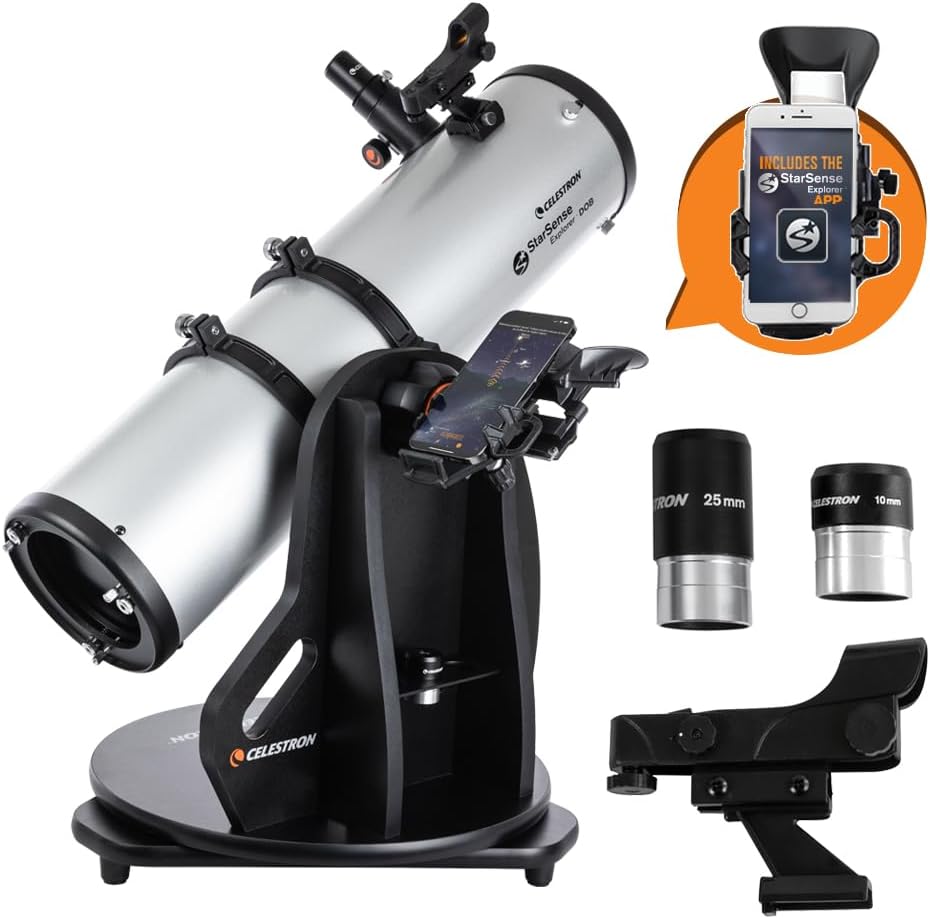
The StarSense Explorer introduces a unique approach by using smartphone recognition to locate stars. Instead of motors, it uses sensors to analyze the sky and guide you with arrows on the screen. The 150mm aperture delivers bright views of deep-sky objects.
We may earn a commission when you buy through this link, at no additional cost to you.
You dock your phone on the telescope base and follow on-screen cues. When the bullseye turns green, the object is aligned. This eliminates the need for heavy motors while maintaining precision. The Dobsonian base offers stability and ease of movement.
Since it relies on a phone, battery life can limit sessions if not prepared. It does not track objects automatically so you must adjust manually. However, it offers a smart way to find targets without complex electronics in the scope itself.
This telescope is great for tech-savvy users who prefer simplicity. It bridges the gap between manual and computerized telescopes. If you want a large aperture at a reasonable price with smart guidance, this is an excellent option.
The app turns your phone into a celestial navigator. By analyzing star patterns, it knows exactly where the telescope is pointing and guides you to targets intuitively.
We may earn a commission when you buy through this link, at no additional cost to you.
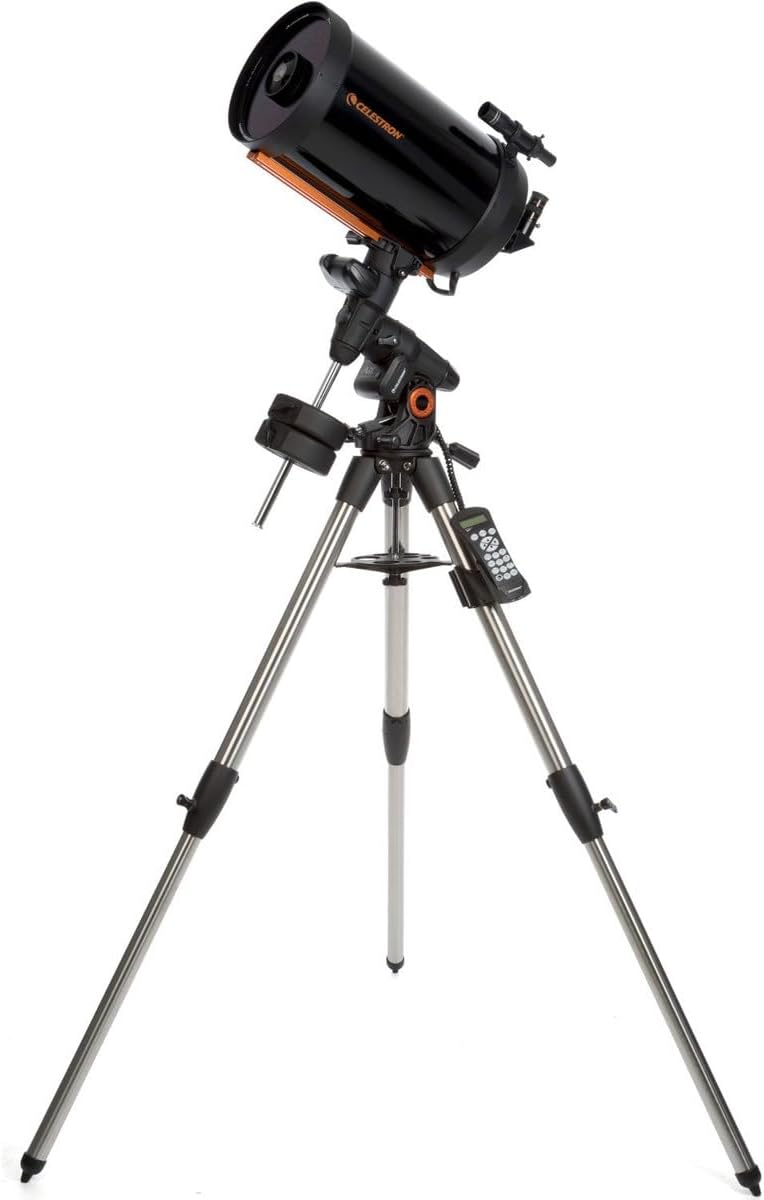
The Advanced VX 8 combines an 8-inch optical tube with a robust German Equatorial mount. This design is preferred for serious astrophotography because it tracks the sky smoothly along celestial axes. The mount supports significant weight, allowing for future upgrades.
We may earn a commission when you buy through this link, at no additional cost to you.
Setup involves polar alignment which is more involved than altazimuth systems. However, the result is superior tracking stability. The NexStar+ controller provides access to a large database and precise GoTo functions. The tripod is sturdy, reducing vibrations during observation.
Its weight makes it less portable than tabletop models, so it is best for semi-permanent sites. The investment in a heavy-duty mount ensures the scope performs well over many years. It suits users who want to transition into deep-sky imaging.
This is ideal for intermediate astronomers who want a long-term system. If you plan to photograph faint nebulae, the equatorial mount is essential. It offers professional stability at a mid-range price point for advanced hobbyists.
The German Equatorial mount tracks stars precisely to avoid field rotation. This is critical for long-exposure photography where stars must remain points of light throughout the capture.
We may earn a commission when you buy through this link, at no additional cost to you.
The Advanced VX 9.25 offers massive light-gathering power with its 9.25-inch aperture. This allows for views of galaxies and nebulae that are faint in smaller telescopes. The mount ensures that heavy tube remains steady during high magnification observations.
We may earn a commission when you buy through this link, at no additional cost to you.
Its design supports useful magnification up to 555x for fine planetary detail. The NexStar controller simplifies object location, making the large aperture easy to manage. This model is built for observers who want the best optical performance available.
Portability is limited due to the weight and size. It requires a dedicated space for setup and storage. The investment is significant but delivers professional-grade views. It is a tool for serious observers committed to detailed sky exploration.
This is best for users who prioritize visual performance over portability. If you want to see faint details in deep-sky objects, the large aperture is unmatched. It is a top choice for those ready to invest in premium equipment.
The 9.25-inch diameter collects more photons than almost any amateur scope. This allows you to see fainter and more distant objects clearly, revealing details hidden to smaller instruments.
We may earn a commission when you buy through this link, at no additional cost to you.
The Advanced VX 6 provides a balanced setup for users wanting an equatorial mount without the bulk of larger models. Its 6-inch aperture offers a solid balance between portability and light grasp. The mount supports imaging applications well for entry-level astrophotographers.
We may earn a commission when you buy through this link, at no additional cost to you.
With StarBright XLT coatings, it ensures high transmission and contrast. The NexStar controller is easy to use for locating objects. This setup is robust enough for field sessions and stable enough for imaging sessions.
It requires the same polar alignment as other equatorial systems. The 6-inch tube is more manageable to transport than the 8-inch versions. It delivers sharp views of planets and bright deep-sky targets effectively.
This is perfect for intermediate users who want imaging capabilities. It bridges the gap between casual viewing and serious hobbyist work. If you want a stable platform for both visual and imaging use, this is a practical choice.
StarBright XLT coatings maximize light passing through the optics. This results in brighter views and better contrast, making faint details easier to see during observations.
We may earn a commission when you buy through this link, at no additional cost to you.
Selecting the right computerized telescope involves evaluating several technical factors that determine performance and usability. This guide explains what to look for to ensure you find a model that suits your needs.
Aperture refers to the diameter of the main optical lens or mirror. A larger aperture collects more light, which is critical for viewing faint deep-sky objects. While larger scopes offer better views, they also add weight and cost to your setup.
Choose a larger aperture if you prioritize deep-sky detail. Opt for a moderate size if portability is your main concern.
Mounts stabilize the telescope and facilitate movement. Altazimuth mounts are simpler and lighter, making them ideal for beginners. Equatorial mounts track the sky more accurately and are necessary for serious astrophotography.
Select a mount based on your primary use. Use altazimuth for casual viewing and equatorial for imaging.
Computerized telescopes use a built-in database to locate objects. Models with larger databases like 40,000+ objects allow access to more deep-sky targets. Some systems rely on external apps which may require a smartphone.
Look for a large internal database for independence. Ensure the system matches your tech preferences.
Alignment is the process of calibrating the mount to the sky. Technologies like SkyAlign allow users to align using any three bright stars. This significantly reduces setup time and frustration for casual observers.
Prioritize models with simplified alignment tools. This ensures you spend more time observing than setting up.
Transporting your telescope to dark sites requires careful consideration of weight and size. Compact tabletop models are easy to carry but may lack stability. Full-size models offer more performance but require more space and effort to move.
Assess how you plan to use your telescope. Choose a size that fits your vehicle and storage space.
Accessories like tripods and eyepieces impact the overall experience. Some models include basic tripods that may vibrate, while others offer sturdy ones. Eyepiece quality affects magnification and viewing comfort.
Check what is included before buying. Ensure the tripod is stable enough for your needs.
Prices range widely from entry-level to professional models. Higher price often correlates with better optics and stability. However, some mid-range options offer excellent value with essential computerized features.
Set a clear budget that accommodates future accessories. Focus on core performance over unnecessary features.
Modern telescopes often integrate with smartphone apps. This adds convenience for navigation and session planning. Some models rely entirely on apps while others use dedicated hand controls.
Decide if you prefer app control or physical controls. Ensure your device is compatible with the system.
Setup begins with placing the tripod on stable ground and ensuring it is level. Power on the mount and enter your location and time for alignment. Follow the prompts on the hand control or app to complete the alignment process using visible stars.
Once aligned, use the GoTo controls to select a target from the database. The mount will automatically move the telescope to center the object. Allow the scope to cool down before imaging to reduce internal air currents.
Clean optics only when necessary using a blower brush to remove dust. Store the telescope in a dry place to prevent mold or rust. Regularly check battery levels and replace them to ensure reliable operation.
No prior knowledge is required because these models automate object location. The built-in systems guide you through alignment and targeting. However, learning basic sky patterns enhances your experience significantly.
Most models using SkyAlign take about five to ten minutes to complete. This involves centering three stars as instructed by the controller. With practice, this process becomes faster and more intuitive.
Yes, but the equatorial models are better suited for long-exposure imaging. Altazimuth models work for short visual sessions. Ensure the mount is sturdy enough to support your camera setup.
Most models use AA batteries or rechargeable packs. Always carry spares for extended sessions. Some premium models include built-in rechargeable batteries.
Yes, though light pollution may reduce visibility of faint objects. Computerized systems help locate planets and bright stars easily. Using a red light filter can help preserve night vision.
Use a blower brush to remove loose dust before using a cloth. Avoid touching glass with fingers. Use only lens cleaner made for optics to prevent damage.
The top picks offer a range of options from the affordable 130SLT to the premium Odyssey PRO. The 8SE remains a top choice for its balance of aperture and automation. Smart telescopes are changing the landscape by integrating imaging technology.
Prioritize aperture if you want deep-sky detail and portability if you plan to travel. Ensure the mount stability matches your expectations for observation quality. Consider future upgrades when choosing a model that grows with your interests.
Remember to verify current prices and availability before making your decision. Technology and stock change frequently in this industry. Use this guide to narrow down the best option for your specific astronomy goals.