
Siraya Tech Tenacious Highly Flexible
4.7Editor score
Soft rubber-like flexibility
High impact resistance
Excellent additive potential
This guide compares the top flexible resin for 3D printing to help you choose the best material for durable, impact-resistant prints.
Flexible resin for 3D printing offers a unique combination of durability and adaptability that standard resins cannot match. Whether you need shock-absorbing components or soft grips, selecting the right material ensures your prints withstand real-world stress without cracking or breaking easily.
We analyzed ten leading flexible resin products based on their Shore hardness, elongation at break, impact resistance, and print compatibility. Our evaluation considers user feedback, technical specifications, and real-world performance to help you find the ideal material for your specific project requirements.
Each pick highlights key strengths and ideal applications to guide your decision-making process effectively. Please note that product availability and pricing fluctuate frequently, so verify current details on the retailer page before making your final purchase decision for your next printing session.
4.7Editor score
4.7Editor score
4.2Editor score
The following table provides a side-by-side comparison of the top ten flexible resin options available today. Each entry highlights key specifications and unique selling points to help you quickly identify the material that aligns best with your printing needs.



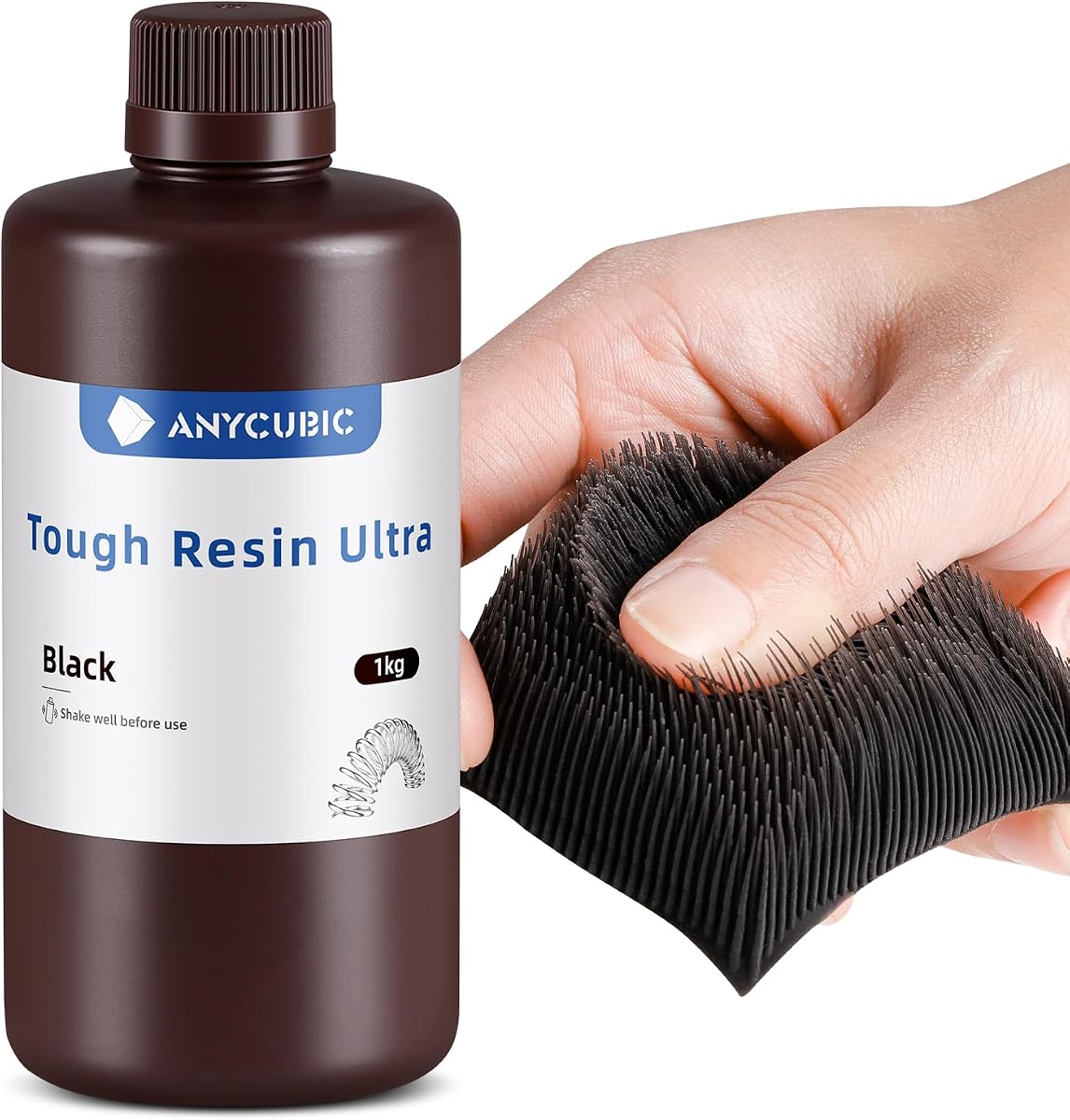
The ANYCUBIC Ultra Tough Resin stands out as a top-tier flexible material designed for demanding applications. With a high rating of 4.7 stars, users praise its outstanding toughness and flexibility that mimics high-quality rubber. This resin recovers quickly after deformation, making it ideal for parts that undergo repeated stress.
We may earn a commission when you buy through this link, at no additional cost to you.
Its precision and versatility shine when printing detailed models like hair textures or articulated figures. The material ensures seamless movement between parts without brittleness. Additionally, the non-irritating finish allows for wearable items like earphone covers, providing comfort and durability in everyday use scenarios.
While mixing this resin with other colors might affect the final hue, the base performance remains robust. It also serves as an excellent additive to boost the toughness of standard resins. Just ensure you follow curing guidelines to maintain its skin-friendly and flexible properties effectively.
This product is perfect for makers needing durable parts or engineers prototyping shock-absorbing components. Its adaptability to direct use or blending makes it a staple for any workshop. If you prioritize resilience and flexibility, this ultra-tough formula delivers consistent results.
This resin recovers swiftly after external forces, ensuring high resistance to damage and deformation during use.
Cured prints offer a gentle skin sensation and seamless movement for models requiring dynamic interactivity.
We may earn a commission when you buy through this link, at no additional cost to you.
Siraya Tech Tenacious Flex Black is a cost-effective choice for users seeking soft and resilient prints. This formulation offers significantly more elasticity than the classic version, making it perfect for projects needing dynamic flexibility. Users appreciate its ability to return to shape quickly after bending.
We may earn a commission when you buy through this link, at no additional cost to you.
It is designed to withstand extreme compression without cracking, ensuring long-term durability. This makes it suitable for shock-absorbing components, gaskets, and pliable prototypes. As an additive, even a small amount can enhance the flexibility of tougher resins in your mix.
While it excels in flexibility, it may not replace the original Tenacious for every application. You should test it on a small scale if structural rigidity is also required. However, for purely flexible needs, it delivers incredible value and performance.
This resin is best for hobbyists and engineers focusing on functional prototypes like grips or protective elements. Its reliability and affordability make it a go-to option for budget-conscious builders. Choose this if you need soft, durable parts without compromising on quality.
Returns to original shape quickly after deformation, offering superior elasticity compared to standard tenacious resins.
Perfect for soft grips and shock components; also boosts impact resistance when mixed with other tough resins.
We may earn a commission when you buy through this link, at no additional cost to you.
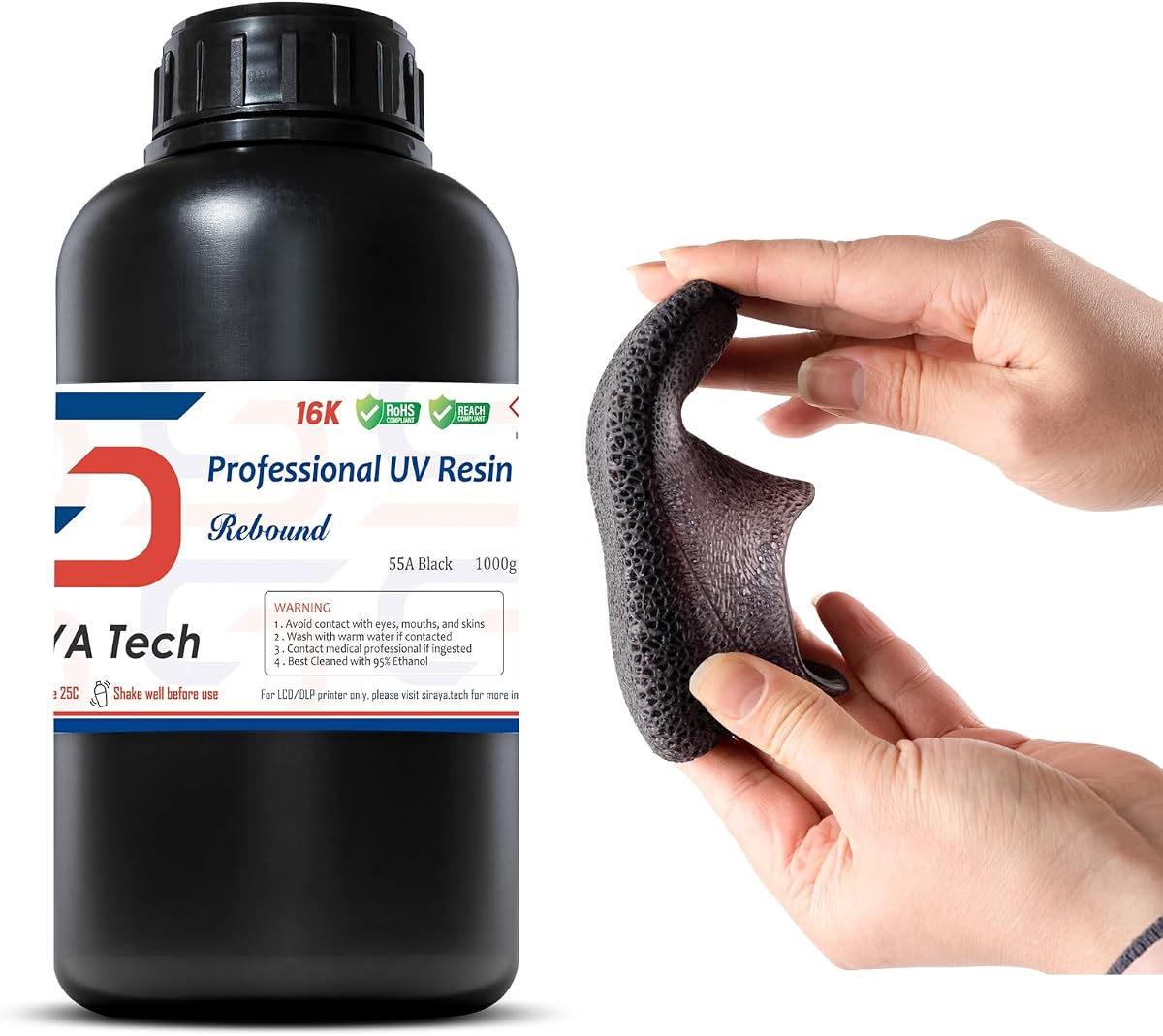
Siraya Tech Rebound 55A is a premium option engineered for applications requiring rapid shape recovery. Its high elasticity makes it superior for shock-absorbing components and personal protective equipment prototypes. The 55A Shore hardness strikes a perfect balance between softness and structural integrity.
We may earn a commission when you buy through this link, at no additional cost to you.
Unlike many elastomers, this resin prints easily on standard 405nm printers without complex mixing or cleaning steps. You can clean prints with standard isopropyl alcohol, simplifying your workflow. This ease of use combined with performance makes it a top choice for industrial prototyping.
Initial testing shows good resilience during compression cycles, though long-term data is still being gathered. The price reflects its advanced formulation and specialized performance. If you need consistent rebound for repeated stress, this material justifies the investment.
This resin suits professionals designing gaskets, seals, or consumer products needing high elasticity. Its ability to maintain properties over cycles adds value to functional tests. Opt for this premium solution when speed and reliability in rebound are critical to your project success.
Provides significantly faster recovery than standard elastic resins, ideal for impact-heavy applications.
Prints on standard LCD/DLP printers with simple alcohol cleaning, perfect for seals and protective gear.
We may earn a commission when you buy through this link, at no additional cost to you.
Superflex 3D Printer Resin prioritizes speed without sacrificing flexible performance. It prints a 50um layer in just 1.7 seconds on monochrome LCD printers, significantly boosting productivity. This speed helps save on time and electricity, making it efficient for larger projects.
We may earn a commission when you buy through this link, at no additional cost to you.
With an 80A Shore hardness, it balances softness and strength well for hard flexible prototypes. The material is ISO 10993-5 certified, ensuring safety when properly cured. Its 100% elongation at break makes it suitable for cushioning and shock absorption needs.
While it offers excellent speed and safety, it is currently available mainly in a clear 500g size. This might limit color options for visual projects. However, for functional prototyping where speed and safety are priorities, it remains a strong candidate.
This resin is ideal for printing farms or professionals needing rapid turnaround on flexible parts. The balance of speed and material properties ensures you get quality results quickly. Choose Superflex if optimizing production efficiency is your main goal.
Prints 50um layers in 1.7 seconds, boosting farm productivity and saving on electricity costs.
80A Shore hardness and ISO 10993-5 certification ensure safe, durable shock-absorbing prototypes.
We may earn a commission when you buy through this link, at no additional cost to you.
SUNLU Flexible 3D Printer Resin provides a practical balance of softness and strength for durable items. With a 70A Shore hardness, it offers good elongation and impact resistance, meaning prints withstand drops without breaking. The smooth finish enhances the tactile experience of your models.
We may earn a commission when you buy through this link, at no additional cost to you.
It features a leak-proof bottle design, which minimizes waste during transport and handling. Compatible with most LCD, DLP, and SLA printers, it fits well into existing setups. Low shrinkage ensures parts retain accurate size and shape after curing.
While some users note a slight odor, it is generally not pungent. The rating is lower than others due to variability in print consistency. However, for general use needing flexibility and a clean surface, it offers good value.
This resin is suitable for making soft items and durable prototypes in home workshops. Its compatibility and smooth results make it a reliable choice for everyday projects. Consider it if you need a cost-effective flexible option with standard packaging.
Offers high-resolution smooth surfaces and accurate sizing due to low shrinkage during curing.
Secure bottle design prevents leaks; works with 99% of LCD, DLP, and SLA printers.
We may earn a commission when you buy through this link, at no additional cost to you.
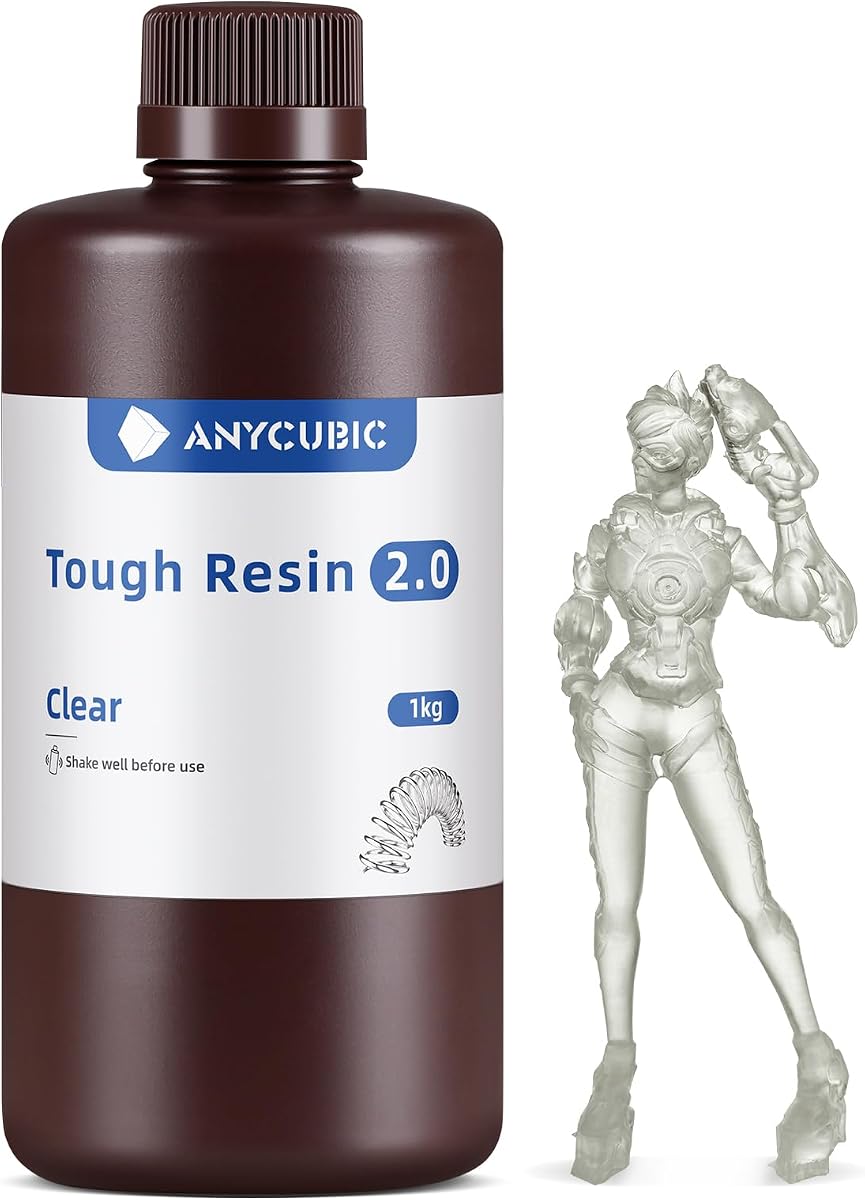
ANYCUBIC Tough Resin 2.0 upgrades flexural strength to handle thin models and miniature parts better. It resists cracking from vibrations or drops, making parts more durable than standard resins. The low-odor formulation creates a comfortable printing environment with fewer volatile compounds.
We may earn a commission when you buy through this link, at no additional cost to you.
High precision and minimal shrinkage ensure clean details and accurate dimensions. This makes it suitable for industrial parts and building models needing reliability. Its compatibility with various wavelengths supports most 4K and 8K printers.
While it is tough, it leans more toward rigid durability than soft flexibility. Users wanting pure rubber-like bending might find it too stiff. However, for parts needing strength with some bend, it performs excellently in real-world use.
This resin fits well for engineers prototyping functional parts or makers needing strong tools. Its balance of precision and toughness ensures professional results without cracking. Choose it for projects requiring robustness alongside detailed printing.
Upgraded flexural strength resists breakage with minimal shrinkage for clear, accurate details.
Reduces volatile compounds for a comfortable, safe, and environmentally friendly printing experience.
We may earn a commission when you buy through this link, at no additional cost to you.
SUNLU High Toughness Resin offers elongation five times higher than standard resins, making prints unbreakable and durable. Its low viscosity ensures easier model formation and better accuracy with vivid details. Low shrinkage reduces distortion, improving success rates for complex parts.
We may earn a commission when you buy through this link, at no additional cost to you.
The low odor and easy cleaning with alcohol make it user-friendly. It is designed for structural parts and solid models needing high strength. This focus on stability helps avoid cracking after wash and cure steps.
While it is tough, it is not as soft as dedicated rubber-like resins. The grey color might not suit aesthetic projects. However, for functional components needing resilience and precision, it delivers reliable performance for repeated use.
This product is ideal for makers building tools, structural frames, or robust prototypes. Its high toughness and ease of use streamline the printing process effectively. Choose it when durability and accuracy are your primary concerns.
Elongation is five times higher than standard resin, making models unbreakable and improving quality.
Low viscosity and shrinkage lead to crisp details and reduced distortion for reliable results.
We may earn a commission when you buy through this link, at no additional cost to you.
ELEGOO Tough Resin provides high hardness and resilience for durable structural parts. It withstands tension and stress with strong damage resistance, suitable for drilling after curing. The fine texture offers weather resistance in humid or extreme temperatures.
We may earn a commission when you buy through this link, at no additional cost to you.
Its low odor creates a comfortable environment, minimizing distractions during printing. This makes it effective for end-use products like jigs, fixtures, and tool elements. It recovers quickly after deformation, showing strong elasticity under stress.
With a Shore hardness of 84.7D, it is harder than standard flexible resins. This may limit applications needing soft touch, but suits rigid tools well. The black color might hide details compared to clearer options.
This resin is perfect for workshops needing robust, functional models or artistic figures. Its durability and resistance to brittleness make it reliable for everyday stress. Opt for this when you need a balance of toughness and practical performance.
Exceeds others with 84.7D hardness and withstands impact without cracking for long-term use.
Fine texture resists brittleness and corrosion in humid environments ensuring extreme temp performance.
We may earn a commission when you buy through this link, at no additional cost to you.
ANYCUBIC Tough Resin 2.0 brings unmatched strength and high precision for industrial parts. It reduces breakage likelihood in thin components, handling drops with flexibility. Low odor and minimal shrinkage make printing pleasant and accurate.
We may earn a commission when you buy through this link, at no additional cost to you.
Exceptional stretch resists damage from cyclic vibrations, ensuring longevity. This suits parts needing high precision in diverse equipment. Its versatility supports everything from shells to delicate industrial spare parts with confidence.
As a clear resin, it highlights detail but lacks color variety. It is more rigid than soft rubber options. If strength and precision are priorities over softness, this formula provides a stable platform for reliable prints.
This resin is tailored for industry-wide applications needing reliable performance. Its accuracy and stretch ensure parts fit perfectly without failing. Choose this for projects where durability and exact dimensions are critical to success.
Significantly enhanced strength resists breakage while stretching effectively to handle drops and vibrations.
Minimal odor creates a pleasant environment, fitting various equipment with exceptional precision and accuracy.
We may earn a commission when you buy through this link, at no additional cost to you.
This flexible and upgraded tough resin delivers high elongation and tear resistance for real-world parts. It simulates rubber with a 90A Shore hardness, allowing repeated folding without breaking. High precision ensures details remain crisp while staying flexible.
We may earn a commission when you buy through this link, at no additional cost to you.
It is built for gaskets, toy tires, and ergonomic grips needing durability. Low odor makes printing comfortable without sacrificing detail. This formula stays tough under stress, preventing cracks that ordinary resins suffer from.
With a 90A hardness, it is harder than softer flexible options. This might limit very soft applications, but suits tough prototypes well. The black color ensures durability but reduces visibility for intricate designs.
This product is ideal for engineers and designers making end-use parts or wearables. Its balance of precision and flexibility handles both prototyping and production. Choose it when you need reliable, tear-resistant parts for functional use.
90A hardness simulates rubber toughness while delivering crisp, accurate prints without sacrificing detail.
Ideal for gaskets, tires, and grips needing high elongation and tear resistance under stress.
We may earn a commission when you buy through this link, at no additional cost to you.
Selecting the right flexible resin depends on factors like hardness, print speed, and intended use. Understanding these elements helps you avoid brittle prints and achieve the durability your projects need.
Shore hardness determines how soft or rigid your print feels. Lower values like 55A or 70A offer softer rubber-like parts, while higher values like 80A or 90A provide more structure.
Choose based on whether you need shock absorption or structural integrity. For soft grips go lower, for tough prototypes go higher.
Elongation measures how much the material can stretch before breaking. High elongation means better resilience against bending and impact without snapping.
Look for ratings above 100% for flexible parts. This ensures your models can withstand repeated stress cycles.
Some flexible resins cure faster than others, affecting production speed. Fast-curing resins reduce electricity costs and time on the printer bed.
Check layer time compatibility with your printer. Faster curing improves productivity especially for large batches.
Impact resistance refers to the material ability to absorb energy from sudden forces. Resins with high impact resistance are less likely to crack when dropped.
Prioritize this if your parts face physical use. Good impact resistance ensures long-term durability.
Most resins work with 405nm wavelength printers but always verify. Some need specific LCD or DLP setups to cure correctly.
Ensure your printer supports the resin wavelength to avoid curing issues. Compatibility saves wasted material and time.
Flexible resins can emit strong odors during printing. Low-odor formulations create a more comfortable working environment.
Look for ISO certifications for safety. Proper ventilation remains important even with low-odor resins.
Shrinkage occurs during curing and can distort part dimensions. Low shrinkage ensures your prints retain accurate shapes.
Choose resins with proven low shrinkage rates. This maintains precision for functional prototypes.
Consider where your print will be used. Wearables need skin-friendly finishes while tools need high toughness.
Match the resin to your specific use case. This ensures performance matches expectations.
Always shake the resin bottle gently before pouring to ensure consistent mixing. Avoid air bubbles by pouring slowly and keeping the resin in a cool place.
Use protective gear like gloves and masks during printing. Flexible resins are uncured chemicals until exposed to UV light.
Clean prints with isopropyl alcohol and cure them under UV light for full hardness. Proper curing ensures the final flexible properties.
For functional parts, consider resin with high impact resistance and elongation. ANYCUBIC Ultra Tough or Siraya Tech Tenacious are strong choices for durability.
Ensure proper curing and use resins with high tear resistance. Designing parts with thicker walls also helps reduce tearing.
Yes, mixing flexible resin with standard resin can add toughness. Start with small ratios to test the final hardness.
Wear gloves, masks, and work in ventilated spaces. Flexible resins can be skin irritants before curing.
Sticky prints often mean under-curing. Increase UV exposure time or check your printer settings.
Most LCD or DLP printers support flexible resin. Ensure your printer has 405nm wavelength compatibility.
This guide reviewed ten top flexible resins each offering unique benefits for different applications. From high speed to premium elasticity your best choice depends on your project needs.
Prioritize factors like hardness and impact resistance to get the right performance. Whether you need shock absorption or detailed prototyping there is a perfect fit for you.
Always check current product details and availability before buying. Flexible resin technology evolves quickly so staying updated ensures you get the best quality.