
LGA 1155 Motherboard H61 for Intel 2th/3th Core i7/i5/i3 DDR3
5.0Editor score
Supports Intel 2nd and 3rd Gen CPUs
Includes M.2 SSD interface for storage
Dual-channel DDR3 memory slots available
This guide compares the top Lga 1155 Motherboard options for legacy builds, reviewing features, compatibility, and performance for Intel 2nd and 3rd Gen
Finding the right Lga 1155 Motherboard is essential for building a reliable system with older Intel processors. These boards support a wide range of Core i3, i5, and i7 chips from the second and third generations, offering solid performance for everyday tasks and light gaming without breaking the bank.
We have carefully evaluated ten distinct models to help you navigate the market. Our analysis focuses on chipset capabilities, expansion slots, memory support, and connectivity options. By comparing these factors, we aim to highlight which boards offer the best value and reliability for your specific needs.
Each pick in this list showcases unique strengths tailored to different user requirements. Whether you need budget-friendly simplicity or advanced overclocking features, there is a suitable option here. Please note that availability and pricing can change frequently, so verify current stock before purchasing.
5.0Editor score

4.3Editor score

4.0Editor score
The following table provides a side-by-side comparison of all ten models analyzed in this guide. It highlights key specifications to help you quickly identify which board matches your hardware requirements.



This H61 motherboard stands out as an incredibly budget-friendly option for those looking to revive older Intel systems. With a perfect rating from users, it offers essential features like M.2 storage support which is rare at this price tier. It supports a wide range of processors including Core i3, i5, and i7 from the second and third generations.
We may earn a commission when you buy through this link, at no additional cost to you.
The board features dual-channel DDR3 slots allowing up to 16GB of memory which is sufficient for most everyday computing tasks. It also includes an M.2 interface that can be converted between NVMe and NGFF modes providing flexibility for modern storage solutions. The PCIe X16 slot ensures you can add a dedicated graphics card if needed for better performance.
While it lacks a physical user manual which might be challenging for first-time builders the essential connections are straightforward. The absence of a CR2032 battery means you will need to purchase one separately to ensure proper CMOS functionality. Overall the trade-offs are minimal considering the cost efficiency it provides.
This board is ideal for users on a tight budget who need a reliable foundation for office work or light gaming. It is particularly useful for repurposing existing hardware with Xeon E3 processors which offer strong performance per dollar. We recommend this for anyone seeking maximum value without sacrificing critical functionality.
The inclusion of an M.2 slot on an H61 chipset board is a significant advantage for storage speed and flexibility.
Support for both consumer Core series and server Xeon E3 chips makes this board versatile for various build scenarios.
We may earn a commission when you buy through this link, at no additional cost to you.
The MACHINIST H61 offers a compact Flex-ATX design that fits well in smaller cases while still providing essential gaming features. It supports Intel processors from the second and third generations making it a solid choice for budget builds. The board includes an M.2 slot which allows for faster boot times and system responsiveness.
We may earn a commission when you buy through this link, at no additional cost to you.
Users should note that the LAN speed is limited to 100M which may not suffice for heavy internet usage or large file transfers. Additionally the lack of integrated graphics on some Xeon processors means you must have a discrete GPU for display output. Despite these limitations it remains a functional option for basic gaming rigs.
The board requires careful setup as the package does not include a user manual or battery. You will need to download drivers separately and ensure your CPU supports integrated graphics if you plan to use onboard video. Proper attention to these details can prevent common boot issues.
This model is best suited for users who need a small footprint board for a home theater PC or light gaming. It provides good value for the price point though you must accept the trade-offs in networking speed and manual support. We recommend checking CPU compatibility thoroughly before purchase.
The Flex-ATX layout allows this motherboard to fit into cases that standard ATX boards cannot accommodate.
Even with an older chipset the addition of M.2 support lets you use modern SSDs for better performance.
We may earn a commission when you buy through this link, at no additional cost to you.
The Gigabyte Z77-DS3H represents a strong balance between performance and reliability for LGA 1155 builds. As a Z77 chipset board it supports overclocking which allows you to unlock extra performance from unlocked processors. This feature is rare in budget boards and adds significant value for enthusiasts.
We may earn a commission when you buy through this link, at no additional cost to you.
It includes Gigabit LAN which ensures fast network connectivity essential for online gaming and large downloads. The ATX form factor provides ample room for expansion cards and better airflow within the case. RAID support is also available allowing you to configure multiple drives for redundancy or speed.
While the board may lack modern USB 3.0 speeds it compensates with robust power delivery and stability. The build quality from Gigabyte is known to be solid ensuring the board lasts through years of usage. Some users may find the manual sparse but community resources are abundant for this popular model.
This motherboard is the top choice for those who want to push their hardware limits without spending a fortune. It is perfect for gaming rigs or workstations where speed and stability are paramount. We highly recommend this model for anyone serious about maximizing their Intel 2nd or 3rd Gen CPU.
The Z77 chipset enables overclocking which is a key feature for performance enthusiasts using K-series CPUs.
Gigabit LAN ensures that your internet connection keeps up with high-speed broadband and local transfers.
We may earn a commission when you buy through this link, at no additional cost to you.
The ASUS P8Z77-V is a premium offering that brings advanced features to the LGA 1155 platform. With support for memory speeds up to 2400MHz it allows for better system responsiveness and bandwidth. The USB BIOS Flashback feature simplifies updates significantly which is great for maintaining system stability.
We may earn a commission when you buy through this link, at no additional cost to you.
Fan Xpert 2 provides intelligent control over cooling which helps maintain low temperatures under load. This is particularly useful for overclocked systems where heat management is critical. The board also includes SMART DIGI+ Power Control for precise voltage adjustments improving efficiency and stability.
While the price is higher than budget options the additional features justify the cost for power users. The comprehensive software suite makes system management easier for those who prefer a graphical interface. However the age of the chipset means some modern connectivity options are still limited.
This board is best for users who want a polished experience with easy updates and advanced tuning tools. It is ideal for those who value convenience and control in their build process. We recommend it for enthusiasts who want the best possible stability and features from this generation.
USB BIOS Flashback allows you to update the BIOS without needing a CPU installed saving time and effort.
Fan Xpert 2 automatically adjusts fan speeds to balance noise and temperature effectively.
We may earn a commission when you buy through this link, at no additional cost to you.
This H61 Gaming ATX motherboard offers a balance of features that suit general users looking for reliability. The inclusion of a PCIe 3.0 x16 slot ensures compatibility with modern graphics cards despite the older chipset. It also supports M.2 NVMe storage which helps maintain system speed.
We may earn a commission when you buy through this link, at no additional cost to you.
The board uses all solid state capacitors which improves longevity and stability under various conditions. With HDMI and VGA outputs it supports multiple display configurations without needing a dedicated card for basic use. The 3 phase power design ensures a steady flow of energy to components.
While it lacks advanced overclocking features the board provides stable performance for standard tasks. The LAN speed is limited to 100Mbps which might be a drawback for high-speed internet plans. However for most local tasks this limitation is negligible.
This model is a good middle-ground option for those who need a full-size board without extra cost. It is suitable for office PCs or media centers where high-speed networking is not critical. We suggest this for users prioritizing stability and storage flexibility.
The M.2 slot allows you to use faster NVMe drives even with an older chipset platform.
Both HDMI and VGA ports enable easy connection to a variety of monitors or projectors.
We may earn a commission when you buy through this link, at no additional cost to you.
The ASUS P8H77-V LE delivers reliable performance with an emphasis on energy efficiency and connectivity. The H77 chipset provides support for native USB 3.0 ports which speeds up data transfers significantly. DIGI+ VRM technology ensures precise power delivery for stable system operation.
We may earn a commission when you buy through this link, at no additional cost to you.
EPU offers system-level energy saving which can help reduce power consumption during idle periods. GPU Boost technology allows you to gain additional graphical performance from integrated graphics when needed. These features make it a versatile choice for general home and office computing.
However the H77 chipset does not support CPU overclocking which limits potential performance gains. Users looking to push their hardware beyond stock speeds will need a Z77 board instead. Despite this the board remains a stable and dependable option for daily tasks.
This model is well-suited for users who prioritize energy efficiency and fast external storage connections. It is ideal for multimedia PCs where power savings and quick file transfers are important. We recommend it for those who do not need to overclock their processors.
USB 3.0 support allows for significantly faster connection speeds with external drives and accessories.
EPU technology helps reduce power usage when the system is under light load or idle.
We may earn a commission when you buy through this link, at no additional cost to you.
The ASUS P8H77-V offers a full ATX layout with robust support for memory and expansion cards. It supports up to 32GB of DDR3 memory which is beneficial for multitasking and heavy workloads. The board includes multiple PCIe slots allowing for flexible configuration of graphics or capture cards.
We may earn a commission when you buy through this link, at no additional cost to you.
It supports Intel Turbo Boost 2.0 Technology which dynamically increases CPU clock speeds when needed. This provides better performance for demanding applications without requiring manual tweaking. The H77 chipset ensures compatibility with a wide range of second and third-gen Intel processors.
While the board does not support CPU overclocking it delivers stable performance for standard use cases. The audio features are standard but adequate for most multimedia needs. Users should be aware that this model is priced higher than some competitors with similar specs.
This is a solid choice for users who need a reliable platform for general computing tasks. It is suitable for office environments or home PCs where stability and memory capacity are key. We recommend it for those who prefer a brand known for consistent quality.
Support for 32GB of RAM ensures the system can handle multiple applications simultaneously without slowdowns.
Multiple PCIe slots allow for adding specialized cards such as sound or network adapters easily.
We may earn a commission when you buy through this link, at no additional cost to you.
The Asus P8Z77-V LK provides the essential features needed for an overclocking build without unnecessary extras. It supports two PCIe 3.0 x16 slots which can be used for dual graphics configurations. This makes it a great candidate for multi GPU setups aimed at high-end gaming.
We may earn a commission when you buy through this link, at no additional cost to you.
The Z77 chipset allows for CPU overclocking providing flexibility to tune performance to your needs. SATA 6Gb/s ports ensure fast data transfer to SSDs and HDDs. The board also supports RAID configurations for enhanced data security or speed.
However the board has a more basic feature set compared to higher-end models. There are fewer USB ports and advanced connectivity options which might limit versatility for some users. Despite this it remains a capable platform for performance-focused builds.
This board is ideal for gamers who want to run multiple graphics cards or push CPU speeds. It offers strong core functionality at a reasonable price point. We recommend it for users who prioritize raw performance over extra bells and whistles.
Dual PCIe 3.0 x16 slots allow for running two graphics cards in tandem for increased frame rates.
SATA 6Gb/s support ensures your storage drives operate at their maximum potential speed.
We may earn a commission when you buy through this link, at no additional cost to you.
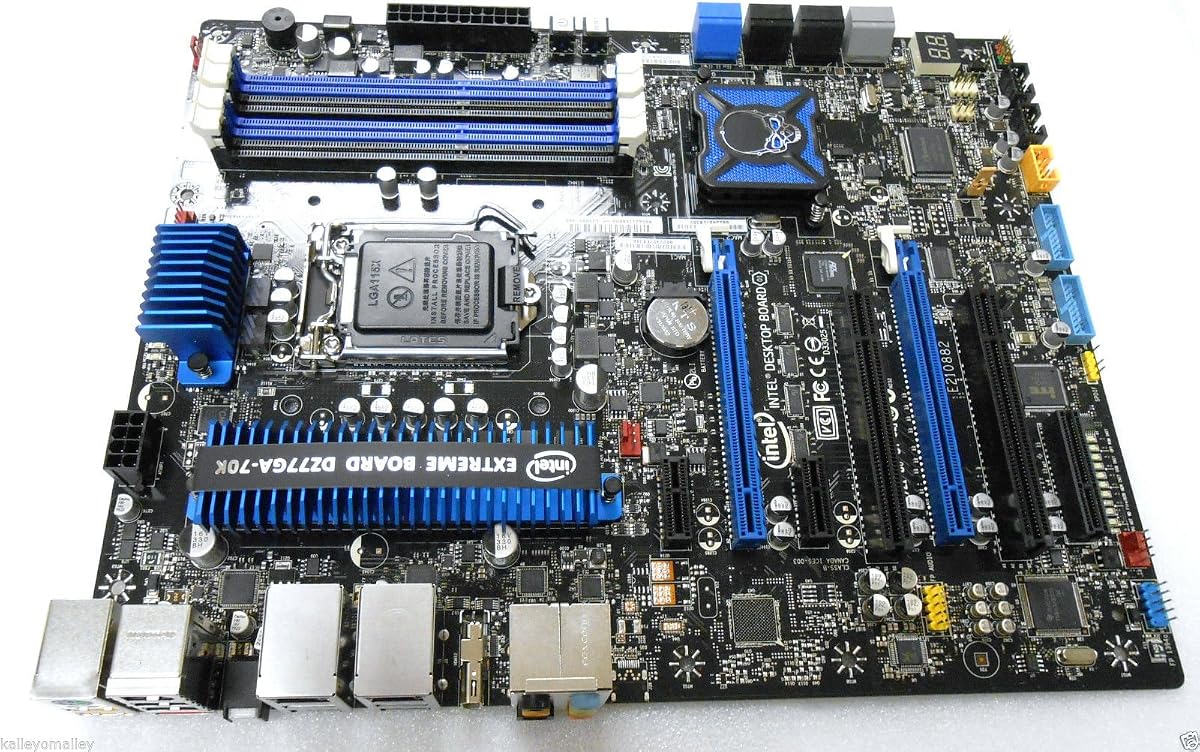
The Intel Z77 Extreme Series offers a premium experience with unique connectivity features. Dual Gigabit LAN provides redundant network connections or specialized server setups. This is a distinct advantage for users needing robust network capabilities.
We may earn a commission when you buy through this link, at no additional cost to you.
It includes legacy ports like Firewire and e-SATA which are rarely found on modern boards. This makes it suitable for professionals who rely on specific peripherals. Realtek HD Audio ensures high-quality sound output for multimedia applications.
While the board is robust finding driver support or replacements can be difficult due to its age. The price is often higher than third-party alternatives with similar features. However the build quality and stability are typically very high for OEM products.
This model is best for professionals or enthusiasts who need specific legacy ports or network redundancy. It offers a unique set of features not found on consumer boards. We recommend it only if you have a specific need for these interfaces.
Dual Gigabit LAN ports allow for failover or load balancing to ensure network stability.
Firewire and e-SATA ports enable connection to older professional equipment and storage devices.
We may earn a commission when you buy through this link, at no additional cost to you.
The ASUS P8B75-M/CSM is designed with stability and business needs in mind. The B75 chipset supports non-K processors making it ideal for office environments where reliability is paramount. It supports high memory speeds and offers a user-friendly UEFI BIOS interface for easy configuration.
We may earn a commission when you buy through this link, at no additional cost to you.
Energy saving features like EPU help keep power consumption low during long operational hours. USB 3.0 Boost improves external storage performance which is useful for data transfer tasks. The board also includes GPU Boost for enhanced graphics performance from integrated units.
It does not support CPU overclocking which aligns with its goal of providing a stable platform. The business-focused features like CSM support ensure compatibility with legacy systems and boot environments. This makes it a versatile choice for various deployment scenarios.
This board is perfect for businesses or users who need a stable reliable platform for daily tasks. It offers good performance without the complexity of overclocking features. We recommend it for those who value long-term stability and ease of use.
The CSM support ensures compatibility with various boot options and legacy enterprise environments.
UEFI BIOS provides a modern intuitive interface for managing system settings and updates.
We may earn a commission when you buy through this link, at no additional cost to you.
Selecting the right motherboard requires understanding your specific needs and the features that matter most for your build. Here are the key factors to consider before making a purchase decision.
The chipset determines the capabilities of the motherboard such as overclocking support and SATA speeds. Z77 boards allow for CPU overclocking which is ideal for performance enthusiasts. H77 and B75 chipsets offer a balance of features and stability for general use. H61 is the most basic option suitable for budget builds without extra frills.
Choose a chipset that aligns with your performance goals and budget constraints.
The form factor determines the size of the board and the case it will fit into. ATX boards offer the most expansion slots and features but require a larger case. Micro ATX and Flex-ATX options are smaller and save space but may have fewer slots. Ensure the board size matches your case compatibility before buying.
Verify your case size limits to avoid fitting issues during assembly.
DDR3 memory support is standard for LGA 1155 boards but speed and capacity vary. Look for boards supporting at least 16GB of RAM for smooth multitasking. Check the maximum supported frequency as higher speeds can improve system performance. Dual-channel configurations are recommended for better memory throughput.
Select a board with enough capacity and speed for your intended workload.
Modern features like M.2 slots can enhance performance even on older chipsets. SATA 6Gb/s is essential for fast SSDs and should be prioritized over older SATA2. Some boards offer RAID support for combining multiple drives for speed or redundancy. Check the number of available ports to meet your storage needs.
Ensure the board supports your preferred storage devices and connection types.
Gigabit LAN is standard for most boards and is sufficient for high-speed internet connections. Some budget options may offer only 100M LAN which can bottleneck fast networks. If you need wireless connectivity check if the board has built-in Wi-Fi or PCIe slot availability for add-on cards.
Choose a board with networking speeds that match your internet plan and usage habits.
Power delivery affects system stability and overclocking potential. Boards with multiple power phases provide better voltage regulation under load. Look for all solid-state capacitors which improve longevity and reliability. Basic boards may suffice for non-overclocked builds but robust power is needed for higher performance.
Prioritize boards with robust power delivery for stability and longevity.
PCIe slots allow for graphics cards and other peripherals like sound or network adapters. Ensure the board has the right number and type of slots for your needs. Some boards support multi-GPU configurations which require multiple PCIe x16 slots. Check the physical layout to ensure proper clearance for your components.
Match the expansion slots to your planned hardware configuration to avoid limitations.
USB and video ports determine how you connect peripherals and displays. Look for USB 3.0 support for faster data transfer with external devices. HDMI and VGA outputs allow for multiple monitor support without needing a discrete card. Check the rear panel layout to ensure it meets your daily connectivity needs.
Verify that the available ports support all your external devices and monitors.
When installing the motherboard ensure all components are seated properly to avoid connection issues. Use the included standoffs to mount the board securely in the case and prevent short circuits. Connect the power cables to the correct ports on the motherboard for stable operation.
Keep the system clean by periodically removing dust from fans and heat sinks. Accumulated dust can cause overheating which may lead to performance throttling or failure. Use compressed air carefully to clean sensitive components without damaging the board.
Update the BIOS only when necessary to fix specific issues or improve compatibility. Always follow the manufacturer's instructions to avoid corrupting the firmware during the process. Maintaining current drivers ensures optimal performance and system stability.
LGA 1155 motherboards support Intel processors from the second and third generations including Core i3, i5, i7, Pentium, and Celeron series. They also support Xeon E3 v2 processors which are popular for budget workstation builds. Always check the specific motherboard's CPU support list before purchasing to ensure compatibility.
No, LGA 1155 motherboards exclusively use DDR3 memory. DDR4 is not compatible due to different physical pin layouts and electrical requirements. You must use DDR3 memory modules to ensure proper functionality with these systems.
No, only motherboards with Z77 chipsets support CPU overclocking. Boards with H77, B75, or H61 chipsets are locked and do not allow for performance tuning. If you plan to overclock, ensure the motherboard has a Z77 chipset specifically.
M.2 slots are not native to the original chipset design but some newer aftermarket boards include them. These slots often offer NVMe support which can significantly boost storage speeds on legacy platforms. Check the product details carefully to confirm M.2 compatibility before buying.
Most LGA 1155 motherboards support up to 32GB of DDR3 memory. Some budget boards may be limited to 16GB. It is best to check the specifications of the specific model to confirm the maximum supported capacity.
If your CPU has integrated graphics you can use the VGA or HDMI ports on the motherboard without a dedicated GPU. However server CPUs like Xeon E3 often lack integrated graphics so you will need a discrete card for display. Check your CPU model to determine if it supports video output.
We hope this guide has helped you narrow down the best options for your legacy Intel build. The top picks range from budget H61 boards to premium Z77 models catering to different needs and performance levels. Each option offers unique features that can enhance your system's reliability and speed.
Prioritize factors like chipset capabilities and expansion slots to match your specific use case. For budget builds the H61 options provide value while Z77 boards offer advanced features for enthusiasts. Remember to check compatibility with your existing hardware before finalizing your choice.
Please verify current prices and availability as stock can change quickly for these older models. We recommend comparing current listings to ensure you get the best deal possible today. Happy building with your selected motherboard.