
Dorhea 7 Pack 3.3V DC-DC Buck Converter 3 Pins AMS1117-3.3V
4.2Editor score
Affordable multi-pack value
Simple three-pin design
Built-in overheat protection
This guide compares the top 5V to 3V voltage regulator options for stable power conversion in electronics projects, embedded systems, and portable devices.
Finding the right voltage regulator is crucial for powering sensitive electronics efficiently. A good unit ensures stable output while protecting your components from fluctuations.
We evaluated ten highly rated models based on input range, output current, size, and protection features. Each option serves different project needs from hobbyists to professionals.
Each pick highlights key specs and real-world performance. Prices vary by seller and stock, so verify current details before purchasing to ensure you get the best value.
4.2Editor score

4.6Editor score
4.9Editor score
This side-by-side comparison details key specifications for each of the ten selected voltage regulators. Review input voltage ranges, maximum output currents, physical dimensions, and protection features to find the perfect match for your specific electronic project requirements and power needs.


This five-pack of buck converter modules offers a robust solution for stepping down 5V or higher inputs to a stable 3.3V output. With a high rating, it is ideal for powering microcontrollers and sensors efficiently.
We may earn a commission when you buy through this link, at no additional cost to you.
The wide input voltage range of 4.5V to 24V makes it versatile for various power sources. Its compact size fits easily into tight PCB layouts, and the low ripple ensures clean power for sensitive electronics.
While the 1.8A output current is impressive, users must add external diodes for inductive loads to prevent damage. This minor extra step ensures longevity and protects downstream components from voltage spikes.
Ideal for hobbyists needing multiple units, this pack delivers consistent performance. Its combination of efficiency, size, and price makes it the top recommendation for most general electronics projects.
Switching technology minimizes heat generation, allowing reliable operation even in enclosed spaces without active cooling.
Works with standard 5V logic supplies as well as 12V or 24V industrial power rails for flexible system design.
We may earn a commission when you buy through this link, at no additional cost to you.
This ten-pack of AMS1117-3.3 linear regulators provides a straightforward way to power low-current circuits from higher voltage sources. It is particularly useful for Arduino projects where simplicity is key.
We may earn a commission when you buy through this link, at no additional cost to you.
The design features easy-to-connect pins that simplify wiring for beginners. Overheat protection ensures the chip shuts down safely if current or temperature limits are exceeded during operation.
Linear regulators run hotter than switching types at high currents, so adequate ventilation is advised. However, for most sensors and logic circuits, the 0.8A limit is sufficient and efficient.
Great for educational kits or prototypes, this set offers plenty of units for group projects. It balances cost and reliability effectively for standard 3.3V logic voltage requirements.
Pin layout matches common development board headers, reducing the need for complex adapter circuits during prototyping.
Over-temperature shutdown protects your circuit from permanent damage if the module becomes too hot during extended use.
We may earn a commission when you buy through this link, at no additional cost to you.
This module stands out because it can step voltage up or down to ensure a steady 3.3V output. It is perfect for portable devices powered by single-cell batteries or variable voltage sources.
We may earn a commission when you buy through this link, at no additional cost to you.
Users rate it highly for its reliability in low-power applications. The small footprint makes it ideal for wearable electronics or compact IoT sensors where space is at a premium.
The 100mA limit restricts it to signal-level loads, so it cannot drive motors. But for transmitting data or reading sensors, it offers excellent regulation efficiency and stable performance.
Choose this for battery-driven projects needing consistent voltage. It ensures your microcontroller stays powered even as battery levels fluctuate, making it a reliable choice for field devices.
Supports input voltages below and above 3.3V, ensuring continuous operation as battery power drains or charges.
Automatically switches between buck and boost modes to maintain the target output voltage across varying input conditions.
We may earn a commission when you buy through this link, at no additional cost to you.
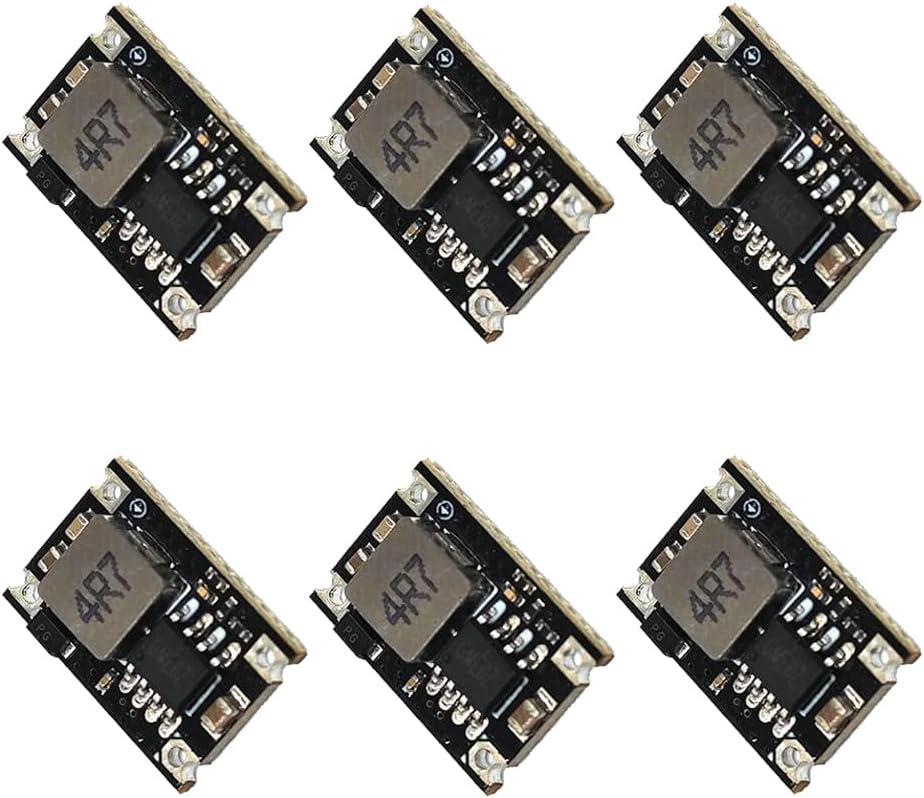
This Mini360-style module delivers solid performance in a very small package. With a 5.0 rating, it is favored by makers who need high current in a limited space.
We may earn a commission when you buy through this link, at no additional cost to you.
The 1.5A output capacity supports demanding components like WiFi modules or small motors. Its low ripple ensures clean power delivery, reducing noise in sensitive signal lines.
Caution is advised with motors or servos, as back EMF can cause instability. Adding external protection components like capacitors helps safeguard the regulator and the load from damage.
Use this for embedded builds where space is tight. Its efficiency and size make it a standout choice for modern electronics projects requiring reliable 3.3V supply.
Fits into tight board areas, allowing for more compact product designs or denser component placement on PCBs.
Low ripple voltage keeps digital logic stable, preventing errors or resets in sensitive microcontroller applications.
We may earn a commission when you buy through this link, at no additional cost to you.
This seven-pack offers a cost-effective way to stock up on regulators for multiple projects. It provides the same trusted AMS1117-3.3 linear regulation in an easy-to-use format.
We may earn a commission when you buy through this link, at no additional cost to you.
The simple three-pin design simplifies wiring for beginners, making it accessible for anyone new to electronics. Overheat shutdown adds an essential layer of safety during testing phases.
While not suitable for high current loads, the 800mA output is enough for most logic circuits. It remains a staple for general purpose low power 3.3V supply needs.
Choose this pack for classroom projects or prototyping labs. It balances price and performance well, ensuring you have enough units for experiments without breaking the budget.
Buying in bulk reduces the cost per module significantly, ideal for workshops or educational environments needing multiple units.
Straightforward wiring reduces setup time, letting you focus on coding and system logic rather than complex power circuits.
We may earn a commission when you buy through this link, at no additional cost to you.
This fifteen-piece pack is ideal for mass production or large workshops needing consistent parts. Each unit provides stable 3.3V from standard 5V or 9V sources reliably.
We may earn a commission when you buy through this link, at no additional cost to you.
The ±2% voltage accuracy ensures devices receive precise power, preventing potential damage. With built-in overheat protection, these regulators can handle extended use without immediate failure.
Since they are linear types, efficiency is lower than switching counterparts. But for low current needs, the simplicity and compact size outweigh the heat concerns in most cases.
Use this for assembly lines or multiple prototypes. The bulk value and consistent performance make it a practical choice for powering many small devices simultaneously.
Stable output accuracy ensures your sensitive chips receive exactly the voltage they expect, reducing failure rates.
Standardized pinout matches common connectors, speeding up assembly for large batches of identical boards.
We may earn a commission when you buy through this link, at no additional cost to you.
This board supports a broad input range up to 30V, offering flexibility for various power sources. The high current rating ensures it can handle heavier loads without stress.
We may earn a commission when you buy through this link, at no additional cost to you.
A reverse polarity mark helps prevent accidental wiring mistakes that could destroy the module. High frequency switching keeps components small while maintaining stable performance under load.
Some users report mixed reliability, so testing each unit before deployment is wise. For most typical applications, it provides a solid balance of power and physical size.
Select this for projects requiring more robust power delivery. Its wide input tolerance and current capacity make it suitable for industrial prototypes or heavy peripheral drivers.
Supports demanding peripherals like high power LEDs or larger motor controllers that need stable 3.3V supply.
Clear markings guide correct wiring, reducing the risk of short circuits during initial setup and testing phases.
We may earn a commission when you buy through this link, at no additional cost to you.
This regulator accepts inputs from 4.5V up to 30V, making it compatible with many battery types and power supplies. It maintains a stable 3.3V output even as input voltage changes.
We may earn a commission when you buy through this link, at no additional cost to you.
Each unit is tested before shipping to ensure functionality. Its small footprint fits seamlessly into wearable tech or IoT devices where space is extremely limited.
The low ripple ensures noise-sensitive components like audio or RF modules stay clean. With a solid 4.8 rating, it is a reliable pick for demanding mobile applications.
Perfect for solar or automotive projects, this module handles variable voltage well. It provides consistent power for your electronics, ensuring stable operation in fluctuating environments.
Works with 5V USB, 12V batteries, and 24V industrial sources, reducing the need for multiple part types.
Low ripple output protects sensitive circuits from noise, ensuring reliable data transmission and logic stability.
We may earn a commission when you buy through this link, at no additional cost to you.
This pack focuses on the common 5V to 3.3V conversion task often seen in digital logic boards. It delivers a fixed 3.3V output ideal for microcontrollers like ESP32 or STM32.
We may earn a commission when you buy through this link, at no additional cost to you.
With a perfect 5.0 rating, users trust its consistent performance. The linear design is simple and reliable for circuits drawing up to 800mA under typical conditions.
Input range is limited to just above 3.3V, so it works best with 5V supplies. It is not designed for wide input variation or very high current loads in demanding systems.
Ideal for Arduino or logic projects, these modules are straightforward to integrate. They provide a stable voltage rail ensuring your logic circuits operate smoothly without voltage drops.
Tailored for standard 5V input, this unit ensures your logic chips receive the precise 3.3V they need.
Direct connection to power rails reduces wiring time, letting you focus on development and prototyping tasks.
We may earn a commission when you buy through this link, at no additional cost to you.
This module combines small size with high performance, making it a premium choice for modern embedded systems. With a 4.9 rating, it delivers reliable power even under heavy loads.
We may earn a commission when you buy through this link, at no additional cost to you.
The 1.8A output capacity ensures it can drive multiple peripherals without sagging voltage. Its tiny dimensions allow it to fit into drones or wearables without adding bulk.
Like similar modules, inductive loads require protection circuitry to prevent feedback issues. Adding a capacitor and Zener diode ensures long-term stability and component safety during operation.
Choose this for high-end prototypes requiring compact power. Its efficiency and robust output make it a top-tier solution for professional electronics needing stable 3.3V rails.
Premium component selection ensures long life and consistent performance across diverse operating conditions and temperatures.
Small size does not sacrifice power delivery, enabling high performance in space-constrained devices like drones.
We may earn a commission when you buy through this link, at no additional cost to you.
Selecting the right regulator depends on your specific project needs. Below are key factors to evaluate before making a purchase.
Ensure the regulator accepts your power source voltage. A wide range like 5V to 24V offers flexibility for batteries or mains adapters.
Always check the minimum input voltage to avoid dropout issues when your power source dips.
Calculate the total current your components require. Ensure the regulator can supply at least that amount plus a safety margin.
Exceeding the current limit can cause overheating or voltage drops that disrupt device operation.
Switching regulators are generally more efficient than linear types. They generate less heat and preserve battery life in portable projects.
For low power needs, linear regulators are simpler, but consider efficiency for high power loads.
Space is often limited in compact projects. Smaller modules like mini360 styles save room for other components.
Verify dimensions before purchasing to ensure fit within your enclosure or PCB layout.
Look for built-in overheat and overcurrent protection. These features prevent damage to your regulator and connected electronics.
External protection might still be needed for inductive loads like motors or relays.
Low ripple ensures clean power for sensitive electronics like sensors and RF modules. Aim for under 50mV where possible.
High ripple can introduce noise causing logic errors or performance issues in digital circuits.
Buying multi-packs often provides better value per unit. Stock up if you plan multiple projects or prototypes.
Ensure each pack includes all necessary hardware for easy installation.
Three pin designs simplify wiring. Look for modules with clear pin labels and compatible connectors for quick setup.
Soldering skills may be required if your project uses custom PCBs.
Start by connecting the input positive and negative terminals to your power source. Ensure your supply voltage matches the regulator specifications before powering on.
Connect the output terminals to your load and verify connections with a multimeter before final assembly. Check for correct polarity to avoid short circuits.
Keep the module in a ventilated area, especially under high loads. Add heat sinks or external capacitors as needed to maintain optimal operating temperatures.
Yes, if the regulator supports a wide input range. Check the minimum and maximum input voltage specs. Many buck converters handle up to 24V or higher safely.
They may need heat sinks when running high currents or large voltage drops. Small 0.8A loads usually do not require extra cooling but monitor temperature.
Buck regulators are more efficient for higher voltage drops. Linear regulators are simpler and cheaper for small voltage differences and lower power applications.
Most buck modules offer ripple under 30mV. Lower ripple ensures cleaner power for sensitive microcontrollers and sensor modules.
It is not recommended without protection. Motors create voltage spikes that can damage the regulator. Add capacitors or diodes for protection.
Yes, most have simple two or three pin connections. Basic soldering is usually all that is needed to integrate them into your project.
Ensure the input voltage is within limits and the load current is not excessive. Add airflow or a heat sink to help dissipate heat effectively.
Consider buying multi-packs if you have multiple projects. Buying 5 to 10 units gives you spares and reduces per-unit cost over time.
The 5pcs 3.3V Buck Converter Module stands out as the top pick with excellent versatility and performance. It offers a wide input range and stable output ideal for most projects.
Prioritize efficiency and protection features when selecting your regulator. High current needs require robust modules with built-in safeguards to ensure reliable operation.
Prices and stock change frequently so verify the current listings before ordering. Choose the right module for your specific needs to build stable and durable electronics.