
Entina Tina2C 3D Printer
4.4Editor score
Fully assembled setup
Auto leveling system
Compact mini footprint
This guide compares the top 3D printers for kids in October 2026, evaluating safety features, ease of use, AI tools, and educational value to help parents
Choosing the right 3D printer for kids can transform a child's interest in technology into a lifelong passion for engineering and design. Modern devices now include safety enclosures, AI design tools, and kid-friendly interfaces that make creation accessible without requiring extensive technical knowledge.
We evaluated leading models based on safety certifications, print speed, software usability, and educational content. Our analysis focuses on how well each printer supports independent use by children while ensuring parents feel confident about safety and reliability during operation.
Each pick in this guide highlights specific strengths like AI creativity, speed, or beginner simplicity. Prices and availability change frequently, so always check the current listing before purchasing to ensure you get the best deal and latest firmware updates for your chosen model.
4.4Editor score

4.5Editor score

5.0Editor score
This side-by-side comparison helps you quickly identify which printer matches your child's age, skill level, and creative goals. We highlight key differences in speed, safety, software, and included accessories to simplify your final decision.


The AOSEED AI 3D Printer stands out as a top choice for families wanting an immersive creative experience. With a rating of 4.5 stars, it balances speed and safety effectively while offering extensive software tools that keep kids engaged for hours.
We may earn a commission when you buy through this link, at no additional cost to you.
Its AI capabilities allow children to generate models from voice or images without needing design skills. The enclosed chamber protects hands from hot parts and moving mechanisms, making it safe for younger users. Filament runout detection and automatic leveling reduce frustration from failed prints.
While it supports only single color printing, the ability to assemble parts creates multi color projects. The included filament and tools mean no extra purchases are needed to start. The only real trade off is the higher price compared to basic models.
Families seeking a gift that sparks long term interest in STEM should choose this model. It teaches spatial reasoning and design thinking through hands on making. The comprehensive kit and safety features justify the investment for curious children.
Kids can turn doodles or photos into 3D models instantly using built-in AI tools that require no prior design experience or complex software knowledge.
The fully enclosed structure and TÜV tested materials ensure hot nozzles and moving gears remain hidden from touch during operation for peace of mind.
We may earn a commission when you buy through this link, at no additional cost to you.
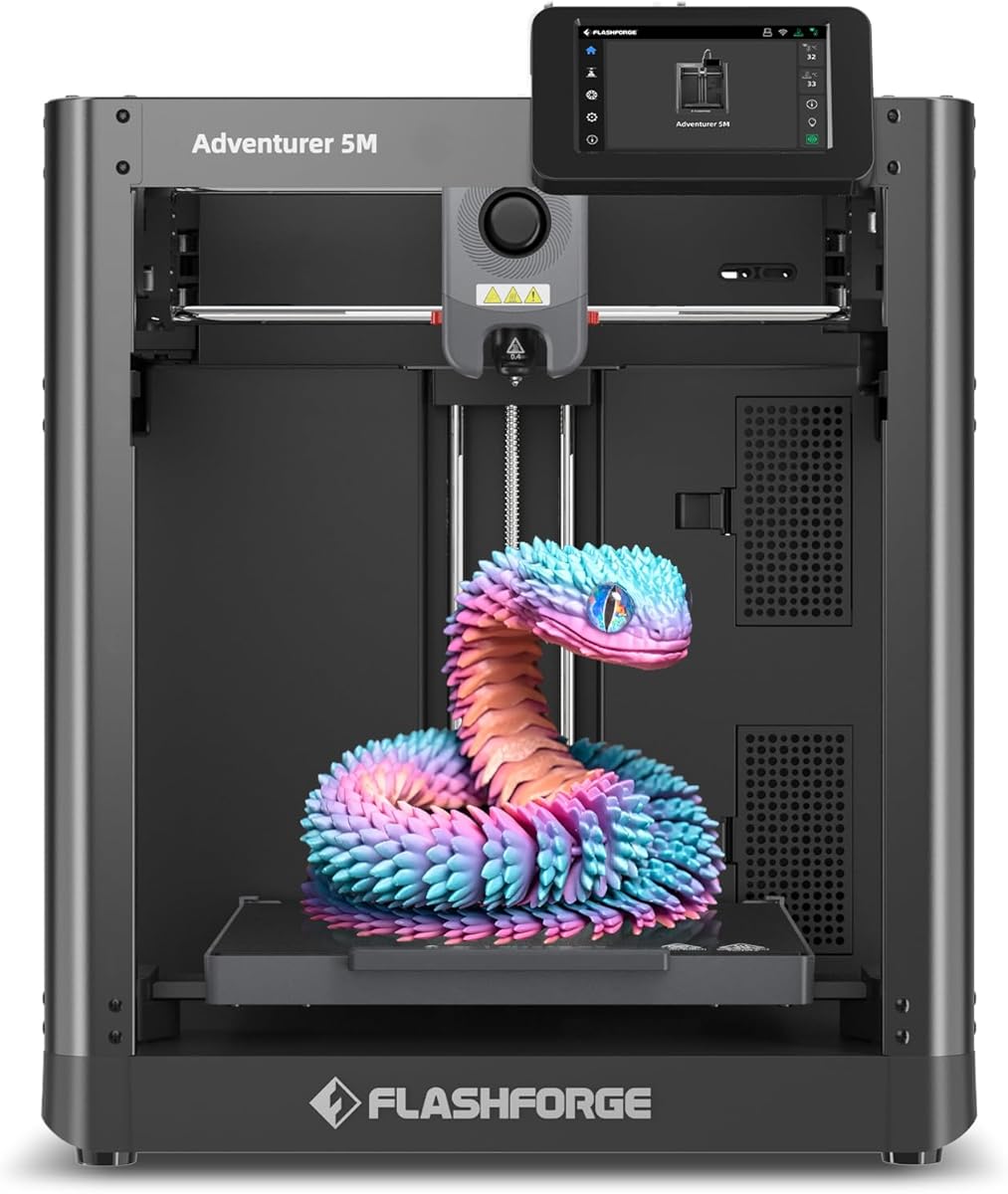
The FLASHFORGE Adventurer 5M prioritizes speed and mechanical robustness over kid specific features. Its CoreXY metal structure and high flow extruder enable fast printing cycles suitable for prototyping. The rating of 3.9 reflects its industrial focus rather than beginner friendliness.
We may earn a commission when you buy through this link, at no additional cost to you.
Automatic bed leveling saves time on setup while the three second nozzle change allows quick maintenance. Remote app monitoring lets parents check progress without being near the machine. The high temperature extruder supports a wide range of materials beyond basic PLA.
However, the lack of an enclosure means hot parts are exposed which requires supervision. The speed might be overwhelming for young children who prefer seeing slow layer by layer growth. It is better suited for teens or adults helping kids with projects.
Choose this printer if you need fast iterations on complex designs with adult oversight. It offers professional grade performance in a compact frame. The build quality supports long term use but safety requires active parental involvement.
Travel speeds up to 600mm/s significantly cut production time for models allowing more projects to be completed in a single session.
The three second detachable nozzle design lets users swap nozzles quickly to match different material requirements without tools.
We may earn a commission when you buy through this link, at no additional cost to you.
The Entina Tina2C offers an affordable entry point into 3D printing with a focus on ease of setup. At 4.4 stars, it is praised for its guided app setup that gets kids printing within minutes. The compact size fits easily on desks or shelves.
We may earn a commission when you buy through this link, at no additional cost to you.
Its auto leveling feature reduces the need for manual adjustments which often confuse beginners. The magnetic build plate allows easy removal of prints without tools. Power loss recovery ensures interrupted prints can resume saving materials and time.
The small print volume limits project size but is ideal for small toys and parts. While the software is simple it may lack advanced customization for older kids. The lack of enclosure means supervision is still recommended for safety.
Budget conscious families will appreciate the value and simplicity of this model. It is perfect for introducing the concept of additive manufacturing without overwhelming users. The included accessories and ready to use state make it a great starting point.
Users can begin their first print in as little as eight minutes thanks to the Poloprint Cloud app that walks through each step clearly.
Support for both WiFi and SD card modes means printing can continue even without an internet connection or local network access.
We may earn a commission when you buy through this link, at no additional cost to you.
The Magic Jimmy 3D Printer is designed specifically for independent use by curious kids who want to create without help. With a 4.6 rating, it emphasizes safety and simplicity. The fully enclosed design prevents access to hot components during operation.
We may earn a commission when you buy through this link, at no additional cost to you.
Setup requires no tools or assembly meaning children can start using it right out of the box. The built in camera records time lapse videos so kids can watch their creations form. One tap printing simplifies the process significantly.
While great for toys and simple models it may lack advanced settings for older students. The enclosure adds safety but limits visibility of layers. The included filament and tools depend on the specific bundle purchased.
Parents looking for a low maintenance gift that encourages creativity will love this option. It turns screen time into creation time by developing spatial reasoning skills. The focus on independence makes it suitable for responsible children.
No tools or manual assembly is required so kids can connect to WiFi and start printing immediately without frustration.
The built-in camera captures time-lapse videos of every print so children can save and share their creative process.
We may earn a commission when you buy through this link, at no additional cost to you.
The AOSEED X-MAKER AI+ represents the premium end of the kids 3D printer market with a perfect 5.0 rating. It combines high performance with a focus on noise reduction and safety. The included filament bundle provides plenty of material to begin.
We may earn a commission when you buy through this link, at no additional cost to you.
Operating under 50 decibels ensures it does not disturb homework or family activities. The touchscreen interface makes navigation intuitive for all ages. Enclosed design keeps hot parts protected while magnetic plates simplify print removal.
Despite fewer model options than competitors the quality is high. The AI tools support personalization that grows with the child. The main drawback is the cost which might be prohibitive for some budgets.
Families wanting the quietest and most polished experience should invest in this model. It supports deep engagement through STEM learning modules and advanced design tools. The high rating reflects exceptional reliability and user satisfaction.
Quiet noise levels under 50 dB allow printing during study sessions or shared spaces without disrupting concentration or sleep.
Included access to creator courses guides kids through structured learning paths that expand design skills over time.
We may earn a commission when you buy through this link, at no additional cost to you.
The Toybox 3D Printer provides a complete starter kit that includes filament and accessories for immediate use. With 4.4 stars it is known for reliable performance and ease of use. The high precision allows detailed small parts for school projects.
We may earn a commission when you buy through this link, at no additional cost to you.
Automatic nozzle cleaning ensures consistent quality without manual intervention. One touch filament loading simplifies maintenance tasks for parents. The magnetic PEI bed supports quick removal of finished items.
The small volume is great for miniatures but limits larger toys. While the software is streamlined it lacks advanced creativity tools found elsewhere. The warranty and support provide extra reassurance.
This option is ideal for classrooms or families needing a simple reliable printer. It minimizes setup time so kids can focus on designing. The precision is impressive for its size and price.
Automatic nozzle cleaning maintains consistent flow and quality so users spend less time troubleshooting and more time creating.
Precision down to 0.01mm enables detailed results for small projects that require fine detail and accuracy.
We may earn a commission when you buy through this link, at no additional cost to you.
Another variant of the Magic Jimmy focuses on STEM development through hands on creation. Its 4.6 rating highlights reliability and educational value. The cool touch exterior adds an extra layer of safety for younger users.
We may earn a commission when you buy through this link, at no additional cost to you.
Kids can design using AI tools or browse a large library of toys. The time lapse feature makes the printing process visible and engaging. New models are added weekly to keep content fresh and exciting.
While it lacks advanced technical features it excels at simplicity. The enclosed design ensures safety without constant monitoring. It works well as a standalone gift that grows with the child.
For parents seeking a gift that encourages independent problem solving this is a strong choice. It transforms digital interest into physical creation. The focus on education makes it a valuable long term investment.
Once set up kids can browse design and print independently fostering confidence and ownership over their projects.
AI tools and growing model libraries help develop spatial reasoning and design thinking skills in a fun engaging way.
We may earn a commission when you buy through this link, at no additional cost to you.
The Entina Tina2C Bundle adds color filament to the standard model for immediate multi color projects. With a 4.4 rating it balances affordability and functionality well. The extra colors help kids experiment with aesthetics right away.
We may earn a commission when you buy through this link, at no additional cost to you.
Built-in LED lighting improves visibility of the print process without glare. The magnetic plate and quick swap nozzle simplify maintenance tasks. It remains compact enough for small desks or home offices.
The bundle is more cost effective than buying filament separately. However the print size still limits large creations. The software is user-friendly but not advanced enough for complex designs.
Families wanting colorful fun from day one will appreciate this bundle. It reduces the friction of setup and material prep. The included accessories make it a great option for first time users.
Four vibrant PLA colors are included so kids can immediately create multi-colored projects without buying extra filament.
Low noise operation and compact footprint make it suitable for shared workspaces without causing distractions.
We may earn a commission when you buy through this link, at no additional cost to you.
This version of the Magic Jimmy highlights its role as a gift that keeps giving. With 4.6 stars it is praised for turning screen time into creation time. The emphasis on independent use makes it ideal for birthdays or holidays.
We may earn a commission when you buy through this link, at no additional cost to you.
The model library updates weekly ensuring fresh content over time. Importing STL files allows expansion beyond provided options. The safety features mean parents can trust kids to use it unsupervised.
The price point might be high but the educational value offsets cost. It focuses on fun rather than technical depth which suits younger children well. The packaging and presentation are gift ready.
Gift givers wanting something meaningful and durable will find this model fitting. It supports creative thinking and problem solving skills. The focus on fun makes learning feel like play rather than work.
Develops spatial reasoning and design thinking through the process of creating physical objects from digital ideas.
New models and tools added weekly ensure the printer stays relevant and exciting for years to come.
We may earn a commission when you buy through this link, at no additional cost to you.
The Bambu Lab A1 mini brings advanced automation to the kids market with a perfect ecosystem approach. A 4.4 rating reflects reliable performance and easy setup. The included LED Lamp Kit provides a practical project right out of the box.
We may earn a commission when you buy through this link, at no additional cost to you.
Auto calibration ensures flawless first layers without manual adjustment. MakerWorld access offers a huge library of ready to print models. The handheld app makes monitoring and management simple from any phone.
While designed for beginners the system is built on advanced tech. The noise level is low and the machine is reliable. It may require more oversight due to lack of enclosure compared to others.
Families wanting a modern integrated experience will find this printer rewarding. The ecosystem support makes finding models easy. It is a great entry into professional grade home printing.
Automatic calibration removes manual steps so users can focus on design rather than troubleshooting setup issues.
Access to MakerWorld offers huge libraries of ready-to-print models so users can find designs for any project instantly.
We may earn a commission when you buy through this link, at no additional cost to you.
Selecting the right 3D printer requires balancing safety, simplicity, and creative potential. Below are key factors to consider when comparing models for your child's age and interests.
Safety is the most critical factor when buying a printer for kids. Models with fully enclosed chambers protect children from hot nozzles and moving parts. Look for cool-touch exteriors and certifications from trusted testing bodies.
Always prioritize models with enclosed designs for younger children. This physical barrier reduces injury risk while allowing independent use under supervision.
A printer that takes hours to assemble will discourage children from using it. Look for fully assembled or semi-assembled models that start printing within minutes. Auto-leveling features further reduce manual adjustments.
Choose models that start printing in less than ten minutes. Quick setup ensures kids stay motivated by immediate results rather than waiting for configuration.
Modern kids printers often include AI tools that turn text or images into models. This lowers the barrier for design and allows children to print ideas without CAD experience. Check if the software is intuitive.
AI tools like doodle or photo-to-print features make the printer accessible to all skill levels. Ensure the app is user-friendly and runs on your family's devices.
Check what types of filament the printer supports. Most kids printers work best with PLA which is non-toxic and easy to print. Avoid models that require high-temperature filaments like ABS unless supervised.
Stick to PLA-only printers for safety and ease. PLA offers a wide range of colors and is safer to use around children without special ventilation.
The build volume determines the maximum size of prints. Mini printers are great for small toys and parts but limit larger projects. Ensure the size fits your available space like a desk or shelf.
Select a build volume that matches your child's project goals. Smaller volumes reduce print time and filament use while keeping costs manageable.
Printers that operate quietly are better for shared spaces. Look for models rated under 50 decibels to avoid disturbing homework or family activities. Quiet motors contribute to a more pleasant creative environment.
Prioritize quiet models if printing will happen in shared areas. Low noise levels prevent distraction and make long print sessions more comfortable.
Access to a large library of pre-made models keeps kids engaged long term. Check if the manufacturer regularly adds new designs. A growing library ensures the printer stays useful as skills develop.
Choose models with regular content updates to sustain interest. A large variety of designs encourages exploration across different themes and projects.
Reliable customer support is essential for troubleshooting. Look for warranties, technical support lines, and community forums. Good support reduces downtime when issues arise with hardware or software.
Verify the warranty length and support availability before buying. Reliable service ensures that the printer remains functional for years of use.
Start by placing the printer on a stable, level surface away from edges. Ensure the room has good ventilation and keep flammable materials away. Connect to Wi-Fi following the manufacturer's app instructions to enable remote monitoring.
Load the filament using the guide provided in the app or screen menu. Use non-toxic PLA for safety and ease. Calibrate the bed if auto-leveling isn't automatic to ensure the first layer sticks correctly.
Regularly clean the nozzle and check for clogs to maintain quality. Store filament in a dry place to avoid moisture issues. Keep the area tidy and wipe dust from the build plate after each session.
Fully enclosed printers with cool-touch exteriors are safer for unsupervised use. However, adult oversight is always recommended during printing. Check safety certifications and keep children away from the machine while hot.
PLA filament is the safest and easiest option for kids. It prints at lower temperatures, is non-toxic, and comes in many colors. Avoid ABS or high-temperature materials without adult supervision and ventilation.
Simple toys can take as little as twenty minutes on fast printers. Larger or detailed projects may take several hours. Print speed depends on model size and resolution settings chosen by the user.
Most kids printers are fully assembled and ready out of the box. Some may require basic setup like connecting power or filament. Check product details to confirm assembly requirements before purchase.
Yes, AI tools on modern printers let kids create models from text or images. No CAD skills are needed for simple creations. Advanced design software is available for older children interested in engineering.
Many models include power-loss recovery to resume prints after interruption. This prevents wasted filament and time. Check for this feature when buying to ensure reliability during long prints.
Mini printers need a desk space of about four inches per side. Ensure there is room for filament spools and cooling. Keep the area clutter-free for safety and easy access to controls.
The AOSEED AI 3D Printer stands out as the best overall choice with its AI tools and safety. For budget buyers the Entina Tina2C offers great value with minimal setup. Premium seekers will enjoy the quiet AOSEED X-MAKER AI+ experience.
Prioritize enclosed designs and user-friendly software to ensure long-term satisfaction. Safety features should never be compromised for price. Look for models that grow with your child's skills over time.
Always verify current pricing and availability before finalizing your purchase. Prices fluctuate frequently and new bundles may appear. This guide aims to simplify your decision for a lasting creative investment.