
Bingfu 20-1300MHz
4.2Editor score
Magnetic base mounting for easy installation
Compatible with Uniden Bearcat and Whistler
10 feet cable length included in package
This comprehensive guide compares the top base station scanner antenna models for wideband reception, durability, and performance across VHF, UHF, and Ham
Choosing the right base station scanner antenna is crucial for anyone interested in monitoring public safety, aviation, or amateur radio signals. A high-quality antenna ensures clear reception across multiple frequency bands without requiring constant adjustments or expensive equipment upgrades.
We have evaluated ten leading models based on their frequency coverage, build quality, ease of installation, and overall signal performance. Each product was selected for its ability to deliver reliable omnidirectional reception in both indoor and outdoor environments for various user needs.
Every pick below highlights specific strengths such as wideband capabilities, durable construction, or compact design suitable for different mounting scenarios. Please note that availability and pricing may vary over time, so always check current listings before making a final purchase decision.
4.2Editor score
4.7Editor score
5.0Editor score
The following table provides a side-by-side overview of all ten selected models, highlighting their key specifications, frequency ranges, and unique features to help you compare them quickly and efficiently.


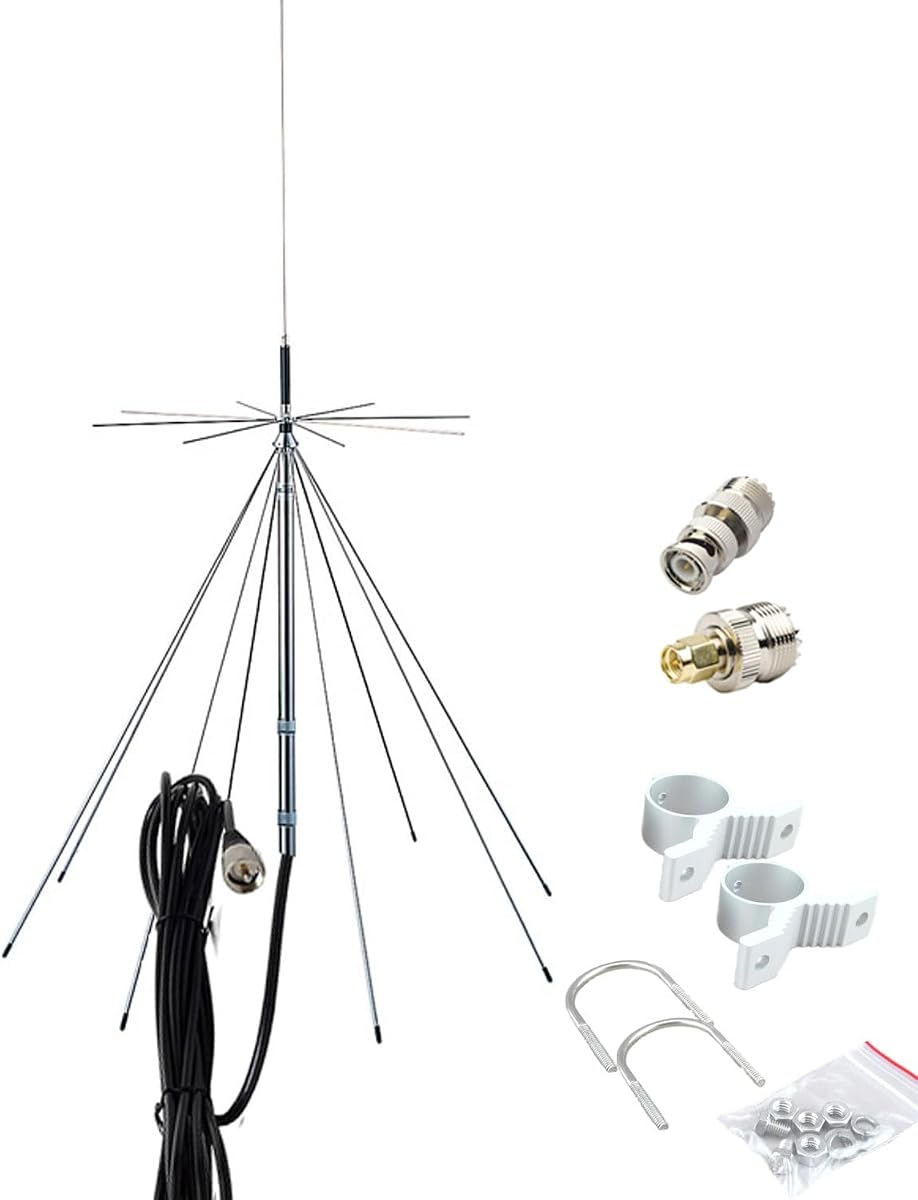
This Discone Antennas model stands out as a top choice for enthusiasts who need reliable wideband coverage across VHF, UHF, and beyond. With a rating of 4.7 stars, it reflects strong user satisfaction regarding its ability to pick up signals from public safety to aviation bands.
We may earn a commission when you buy through this link, at no additional cost to you.
The antenna supports frequencies from 25 to 3000 MHz, making it suitable for receiving and transmitting on Ham radio, CB, and air traffic control frequencies. It comes with a full kit including 10 meters of RG58 wire and various adapters like PL-259, BNC, and SMA, ensuring compatibility with most devices.
While the unit is robust, its size might be a consideration for those with limited space on a balcony or roof. Additionally, removing the top loading coil for compactness requires some disassembly effort which might not be ideal for everyone.
If you are looking for a comprehensive solution that handles multiple radio types without needing extra purchases, this model is an excellent investment. It is particularly recommended for users who value performance and versatility in their base station setup.
The ultra-wideband design ensures you can monitor everything from shortwave to airband frequencies without switching antennas.
All necessary cables and adapters are included so you can start scanning immediately after setup.
We may earn a commission when you buy through this link, at no additional cost to you.
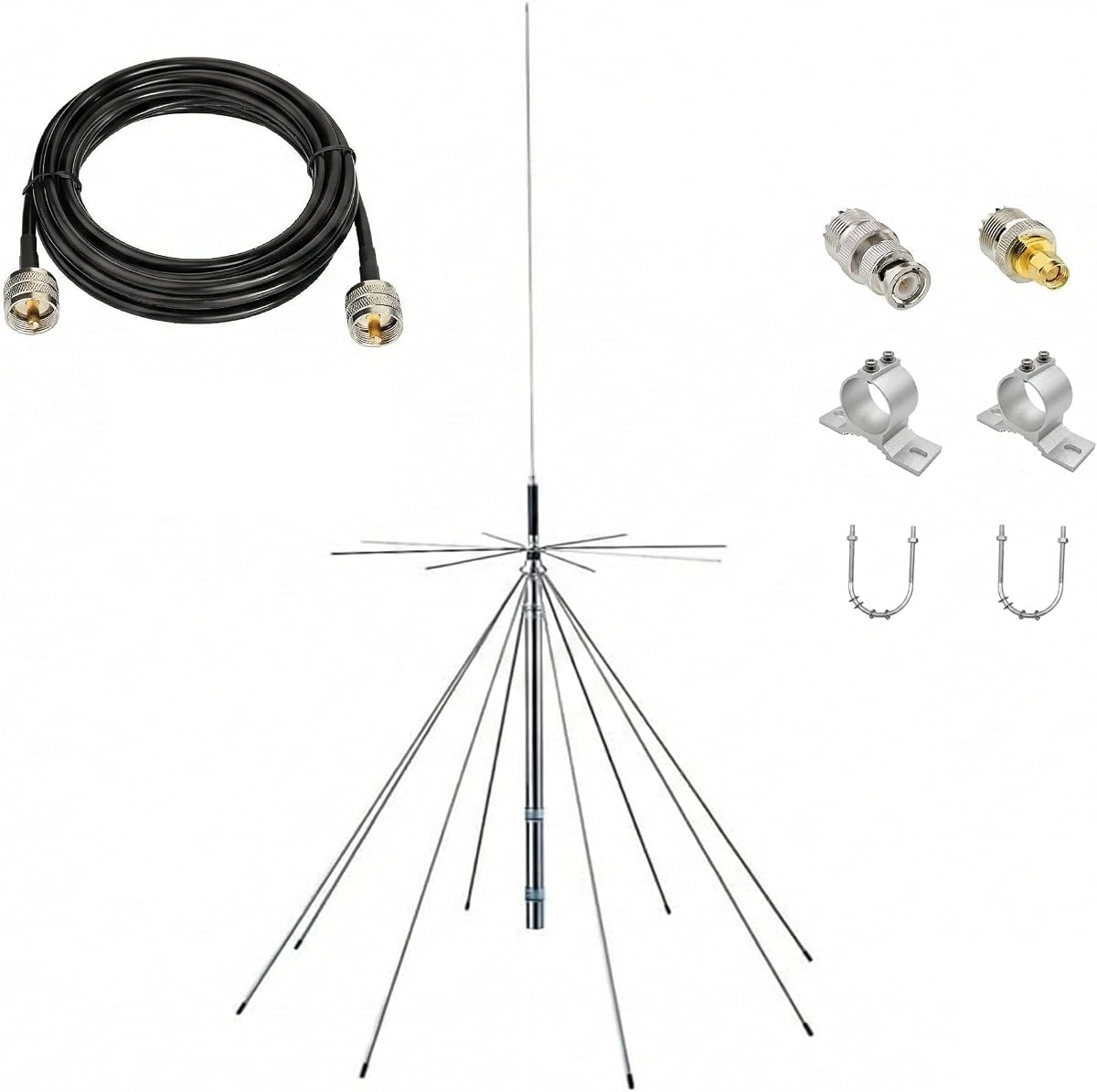
The Tram Super Discone is known for its ability to handle significant power output which is beneficial for users who need to transmit as well as receive signals. Its stainless steel structure ensures longevity even when exposed to harsh weather conditions.
We may earn a commission when you buy through this link, at no additional cost to you.
Covering frequencies from 25 to 1300 MHz, it serves as a versatile tool for scanning and communication. The inclusion of multiple radials allows for customization to match specific mast diameters and environmental needs.
One trade-off is the weight of the stainless steel which may require a sturdy mount. Also the adjustable radials might need some adjustment to fit perfectly on smaller mounts.
For operators who prioritize durability and power handling alongside scanning capabilities, this antenna offers a solid balance. It is well suited for permanent installations where reliability is paramount.
With up to 300 watts max power, this antenna can support high-output transmitters without compromising signal integrity.
The rust-free stainless steel build ensures the antenna remains functional and visually appealing over many years.
We may earn a commission when you buy through this link, at no additional cost to you.
This model is unique because it comes with a portable tripod making it an excellent choice for temporary setups or field monitoring. The stainless steel construction ensures it can withstand outdoor conditions while remaining relatively lightweight.
We may earn a commission when you buy through this link, at no additional cost to you.
It supports a frequency range of 25 to 1300 MHz which covers most public safety and amateur radio bands. The omnidirectional coverage ensures you can receive signals from any direction without needing precise aiming.
However the tripod might not be tall enough for all scenarios and the included cable may need replacement for longer runs. These factors are worth considering if you need maximum range or height.
If you need a scanner antenna that can move with you and set up quickly without drilling holes this package is a convenient option. It is ideal for hobbyists who travel or need temporary coverage.
The included tripod allows for quick deployment in various locations without permanent mounting hardware.
Rust proof stainless steel ensures the antenna maintains its integrity despite exposure to rain or humidity.
We may earn a commission when you buy through this link, at no additional cost to you.
With a perfect 5.0 rating this D3000N model represents the premium end of the market for base station scanners. Users appreciate its robust construction and the comprehensive kit that simplifies the installation process significantly.
We may earn a commission when you buy through this link, at no additional cost to you.
It covers 25 to 3000 MHz allowing for broad reception and transmission capabilities. The heavy-duty stainless steel build guarantees stability even in strong winds which is critical for long term outdoor use.
The main drawback is the cost which is higher than entry level options. Additionally some users have noted that assembling the disk elements can be intricate without clear step by step visuals.
For those who want a set it and forget it solution that performs exceptionally well across bands this antenna is worth the investment. It is best suited for serious enthusiasts who value quality over budget.
The use of heavy-duty stainless steel ensures that the antenna resists corrosion and maintains structural integrity for years.
Every component from bolts to cables is provided so you do not need to buy extra parts for installation.
We may earn a commission when you buy through this link, at no additional cost to you.
This antenna is designed with desktop and indoor use in mind featuring a magnetic base that allows for flexible positioning. It supports a broad range of frequencies making it suitable for various scanning tasks including aviation and public safety.
We may earn a commission when you buy through this link, at no additional cost to you.
The package includes a ground plane mount kit and whips tailored for VHF and UHF bands which helps optimize signal strength. The magnetic base is convenient for temporary setups or testing locations.
However the magnetic base might not hold securely on non metal surfaces and the cable length is relatively short for roof mounting. These factors limit its utility for permanent outdoor installations.
If you need a versatile antenna for indoor monitoring or travel this model provides good value. It is a practical choice for those who want a plug and play solution without complex mounting.
The magnetic base allows you to move the antenna around your home to find the best signal spot easily.
Included short whips are tuned for specific bands to improve performance on VHF and UHF frequencies.
We may earn a commission when you buy through this link, at no additional cost to you.
This GMRS antenna blends mobile and desktop capabilities with a heavy duty magnetic base and a longer cable than many competitors. It is well equipped to receive signals from 25 to 3000 MHz covering aviation and public safety bands.
We may earn a commission when you buy through this link, at no additional cost to you.
The inclusion of a ground plane enhancer helps improve signal quality especially in environments where a natural ground plane is missing. The 16.4 foot cable allows you to place the antenna higher without needing an extender.
While it is effective for scanning it is not designed for high power transmission which limits its use for Ham radio operators who need to transmit. This is acceptable if your primary goal is receiving.
For users who want a single antenna for home monitoring and travel this model is a strong contender. It balances portability with performance making it accessible for a wide range of hobbyists.
A longer coaxial cable gives you more freedom to position the antenna away from your receiver for better reception.
The frequency range includes 1090 MHz which is essential for receiving aviation ADSB data streams.
We may earn a commission when you buy through this link, at no additional cost to you.
This Bingfu model offers an accessible entry point for those new to scanning without requiring a large investment. It is widely compatible with popular scanners like Uniden Bearcat and Whistler which makes it a safe choice for many users.
We may earn a commission when you buy through this link, at no additional cost to you.
The antenna covers 20 to 1300 MHz which includes most public safety and amateur bands. Its magnetic base allows for quick placement on vehicles or metal surfaces making it versatile for various scenarios.
Because it is a budget option the cable length is fixed at 10 feet and the build is not as rugged as premium models. This is acceptable for indoor or temporary use where extreme durability is not required.
If you are looking for a reliable scanner antenna that works right out of the box at a low price this is an excellent pick. It is best for casual listeners or beginners testing the hobby.
Compatible with major brands like Uniden and Whistler ensures you can use it with most existing receivers.
The magnetic base allows for tool free installation on vehicles or metal roofs for quick signal checks.
We may earn a commission when you buy through this link, at no additional cost to you.
Designed specifically with amateur radio in mind this Bingfu antenna provides reliable reception across VHF and UHF bands. It shares similar specs with the previous model but is often marketed towards Ham users.
We may earn a commission when you buy through this link, at no additional cost to you.
The magnetic base and BNC connector make it straightforward to integrate with existing setups. It supports a frequency range of 20 to 1300 MHz ensuring coverage for most common hobbyist frequencies.
As a budget friendly option it may lack the robustness of higher end antennas. The fixed cable length also restricts how high you can place it without extensions.
For Ham operators who need an affordable and versatile receive antenna this model performs well. It is a practical choice for those who prioritize coverage over premium build quality.
This antenna is tuned to work well with amateur radio bands making it a solid choice for Ham operators.
Standard connectors and magnetic mounting allow for quick setup with most existing radio equipment.
We may earn a commission when you buy through this link, at no additional cost to you.
This model is highly rated by users who use Software Defined Radios for its compact and adaptable design. The telescopic feature allows you to adjust the length to optimize reception for specific frequencies.
We may earn a commission when you buy through this link, at no additional cost to you.
It supports 95 to 1100 MHz which covers most amateur and public safety bands including aviation ADSB signals. The magnetic base with included cable and adapters makes it ready to use with most SDR dongles.
While the telescopic mechanism is convenient it may be less durable than solid elements over long periods. Also the max frequency is lower than some ultra-wideband options.
For SDR enthusiasts who value portability and ease of use this antenna is a top choice. It simplifies the experience of scanning on laptops or portable devices without complex setup.
The folding mechanism allows you to shorten the antenna for travel or extend it for better signal capture.
Included adapters ensure it works seamlessly with popular software defined radios like RTL-SDR.
We may earn a commission when you buy through this link, at no additional cost to you.
This antenna is specialized for users who focus on 2m and 70cm bands offering high gain performance for VHF and UHF. The fiberglass body ensures it can withstand outdoor weather conditions without corrosion.
We may earn a commission when you buy through this link, at no additional cost to you.
With a power rating of 200 watts it supports high wattage equipment making it suitable for transmission as well as reception. The two-section design makes it easier to transport and store when not in use.
Because it is dual band only it is not as versatile as wideband options for scanning multiple frequencies. This trade-off is acceptable if you prioritize performance on specific amateur bands.
For Ham operators who want a reliable base station antenna for VHF and UHF this model delivers solid performance. It is best for those who already know their frequency needs and want high gain.
The high gain design helps improve signal strength on VHF and UHF bands for better communication range.
The antenna splits into two sections which makes it much easier to transport and store in a garage.
We may earn a commission when you buy through this link, at no additional cost to you.
Selecting the right antenna depends on your specific needs regarding frequency coverage, environment, and intended use. This guide outlines the key factors to consider before making a purchase.
A base station scanner antenna should cover the bands you are interested in monitoring such as public safety aviation or amateur radio. Look for models that support 25 to 3000 MHz for maximum versatility across different signal types.
Ensure the antenna covers all critical bands including VHF UHF and airband to avoid missing out on important communications.
Since most antennas will be installed outdoors they must be resistant to weather and corrosion. Stainless steel and fiberglass materials offer durability that ensures the antenna lasts for years without degrading in performance.
Choose a model with robust construction to withstand wind and rain effectively in your local climate.
Consider how you plan to mount the antenna whether it is on a roof balcony or desktop. Magnetic bases are convenient for temporary use while permanent mounts require brackets and hardware for stability.
Make sure the antenna comes with the necessary hardware or is compatible with mounts you already own.
The length of the coaxial cable can significantly impact where you can place the antenna relative to your receiver. Longer cables provide more flexibility but may introduce signal loss if not high quality.
Select a cable length that reaches your desired location without needing additional extensions to minimize signal degradation.
Check that the antenna connectors match your scanner radio SDR dongle. Common connectors include PL-259, BNC, and SMA so having adapters included simplifies the setup process.
Ensure the package includes all necessary adapters to connect directly to your specific device without extra purchases.
Most scanners only need to receive signals but some models support transmission for Ham radio use. If you plan to transmit ensure the antenna is rated for your power output and frequency bands.
Confirm the power rating matches your equipment if you intend to use the antenna for transmitting not just listening.
Larger antennas like Discone models offer wide coverage but require space for installation. If space is limited look for compact or telescopic designs that can fit on balconies or small roofs.
Measure your available space and choose an antenna size that fits without compromising performance or stability.
Prices vary significantly based on build quality and features so determine your budget early. Entry level options are great for beginners but premium models offer better durability and coverage for serious users.
Balance the cost with the features you need to ensure you get the best value for your investment.
Install the antenna on a sturdy mast or bracket ensuring it is secure against wind and weather. Use stainless steel hardware if possible to prevent rust over time and maintain structural integrity.
Connect the coaxial cable securely to both the antenna and your receiver to avoid signal loss or interference. Tighten all connectors gently but firmly to ensure a reliable electrical contact without damaging threads.
Periodically inspect the antenna for damage or wear especially after severe weather events. Check cable connections and the mounting bracket to ensure everything remains tight and functional for continued performance.
A base station scanner antenna is a stationary device used to capture radio signals across multiple frequency bands. It connects to a scanner radio or receiver to allow you to listen to public safety aviation amateur and other communications from one location.
Yes using a dedicated antenna improves signal strength and clarity compared to the built-in whip antennas on most scanners. An external antenna allows you to pick up distant stations and reduces noise interference in urban areas.
While some models are designed for indoor use a base station antenna performs best when mounted outside. Indoor placement can limit range due to walls and other obstructions blocking high frequency signals.
A Discone antenna covers a very wide frequency range suitable for scanning many bands while a fiberglass antenna is often tuned for specific bands like VHF and UHF. Discone models are versatile whereas fiberglass ones offer higher gain on specific frequencies.
Mounting your antenna as high as possible generally improves reception by reducing obstructions like trees and buildings. A rooftop or mast installation is ideal but even a balcony mount can offer significant improvements over indoor placement.
Most scanners use different connectors so you may need adapters to connect the antenna to your device. Check your receiver's connector type and ensure the antenna package includes compatible adapters or purchase them separately.
Regularly check cables for wear and ensure connectors are tight and free of corrosion. After storms inspect the mast and brackets for damage to prevent the antenna from falling or sustaining structural issues.
Not all scanner antennas support transmission as they are designed only for receiving. If you plan to transmit verify that the antenna has a power rating and frequency support that matches your transmitter.
We have reviewed ten top models that offer a range of features from wideband Discone options to specialized VHF and UHF antennas. Each pick provides unique benefits depending on your budget space constraints and signal requirements.
When choosing prioritize frequency coverage and build quality to ensure your antenna lasts long and captures clear signals. Consider your mounting options and whether you need transmission capabilities to narrow down your best choice.
Prices and availability can change so always check current listings before finalizing your purchase. With the right antenna you will enhance your listening experience and monitor a wide variety of radio communications effectively.