
Gigabit Dual NIC with Intel 82576 Chip
4.5Editor score
1Gb Intel 82576 controller
Low profile and standard brackets
Wide OS compatibility range
This guide compares the top dual RJ45 port network cards for servers and workstations, analyzing performance, compatibility, and value for diverse computing
Dual RJ45 port network cards are essential for modern servers and workstations requiring redundant or high-speed connections. These adapters enable reliable data transmission across enterprise networks, cloud infrastructures, and home labs with ease. Choosing the right card ensures stability, speed, and compatibility with your existing hardware and operating systems.
We evaluated ten leading models based on controller chipset, PCIe interface, operating system support, and build quality. Our analysis focuses on real-world performance metrics, thermal management, and driver availability to help you make an informed decision. Each product offers unique advantages tailored to specific networking needs and budget constraints.
Every pick below highlights key specifications, pros, cons, and ideal use cases for clarity. Prices and availability change frequently, so verify current details before purchasing. This guide provides the insights needed to upgrade your network infrastructure confidently and efficiently.
4.5Editor score

4.1Editor score
4.5Editor score
This side-by-side comparison highlights critical specifications across all ten products to simplify your selection process. Review controller types, PCIe lanes, supported operating systems, and included accessories to find the perfect match for your setup.


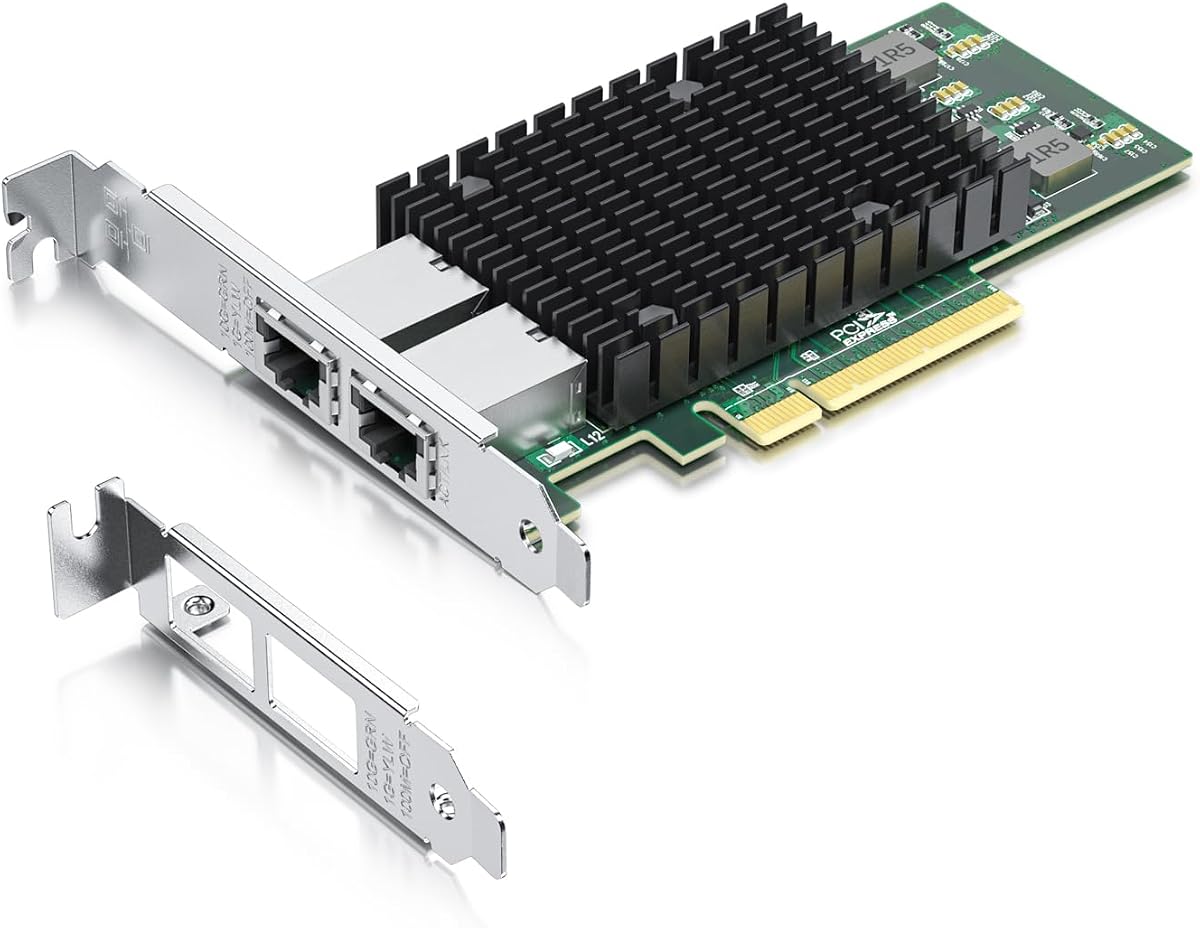
The 10Gtek 10Gb Dual RJ45 Port Network Card stands out as a top performer with its Intel X540 controller. Rated 4.1 stars, it delivers reliable 10Gbps speeds for demanding server environments. Its dual copper ports ensure flexible connectivity options.
We may earn a commission when you buy through this link, at no additional cost to you.
Equipped with an original Intel X540 controller, this card supports Intelligent Offloads for enhanced stability. It works seamlessly with Windows Server, Linux, and ESX systems. The PCIe 2.1 x8 lane interface ensures sufficient bandwidth for high-throughput applications.
While highly capable, Windows 11 users may need to manually configure drivers. Additionally, it lacks hot swapping features, requiring system shutdown for installation. These trade-offs are acceptable for most stable server deployments.
Ideal for data centers and home labs needing high-speed redundant links, this card offers excellent value. Choose it for its robust controller and wide OS support to future-proof your network infrastructure.
The Intel X540 chip provides consistent throughput and reduces CPU load during heavy data transfer tasks.
Compatible with major server and desktop OS platforms, ensuring flexibility across diverse IT environments.
We may earn a commission when you buy through this link, at no additional cost to you.
This dual port card features the newer Intel I226-V chip, offering improved packet stability over longer cables. With a 4.6 rating, it balances performance and efficiency well for workstations and small servers. It supports 2.5Gbps speeds for faster desktop connections.
We may earn a commission when you buy through this link, at no additional cost to you.
The I226-V replaces the discontinued I225-V with better error rates and accuracy. It integrates well with Windows 10/11, Linux, and VMware environments. The PCIe 3.1 x1 lane provides adequate bandwidth for 2.5Gbps without bottlenecking.
Users must verify motherboard compatibility and BIOS settings before purchase. While the single lane limits maximum potential throughput, it suits most mid-range needs. The energy-efficient design is a plus for 24/7 operation.
Best for users upgrading from 1G to 2.5G networks, this card offers modern features at a reasonable cost. Ensure your motherboard supports I226-V to avoid compatibility issues during installation.
Improved error rates on I226-V ensure reliable connections over standard Cat6 cables up to 100 meters.
Reduced active power consumption makes this card suitable for always-on home or office servers.
We may earn a commission when you buy through this link, at no additional cost to you.
The VIMIN 10G card leverages the trusted Intel X540-T2 chipset for stable 10Gbps throughput. Rated 4.5 stars, it suits high-end servers needing dual high-speed links. The dual copper ports simplify deployment without fiber transceivers.
We may earn a commission when you buy through this link, at no additional cost to you.
Designed with a heat sink and gold finger interface, it maintains optimal temperatures under load. It fits PCIe x8 and x16 slots, offering deployment flexibility. Windows, Linux, and VMware are fully supported for seamless integration.
Note that 2.5Gbps and 5Gbps speeds are not supported on intermediate devices. This means it operates at 1Gbps if connected to lower-speed network equipment. Ensure your switches match the 10G capability.
Ideal for demanding data centers or home labs, this card delivers consistent performance with robust build quality. Choose it if you need dual 10G copper ports without complex fiber infrastructure requirements.
Built-in heat sink dissipates excess heat, ensuring long-term stability during intensive network operations.
Compatible with both x8 and x16 PCIe slots, allowing installation in diverse server chassis configurations.
We may earn a commission when you buy through this link, at no additional cost to you.
This dual-port card supports Intel 82575/82576 chips for stable 1Gbps connections. With a 4.4 rating, it is ideal for legacy systems or environments not requiring higher speeds. It includes extensive protocol support like PXE and VLAN filtering.
We may earn a commission when you buy through this link, at no additional cost to you.
The alloy heat sink effectively removes excess heat for steady operation. It works with Windows 7 through 2012, Linux, FreeBSD, and older VMware ESX versions. The PCIe 2.1 x1 lane suits standard server architectures.
It does not support VMware ESXi 7.0 or above, which may limit modern virtualization setups. Also, speeds are capped at 1Gbps regardless of switch capabilities. These constraints define its niche in older infrastructures.
Best for upgrading older servers or maintaining legacy hardware, this card offers dependable performance. Verify ESXi compatibility if using virtualization, as newer hypervisors are not supported.
Supports decades-old operating systems, making it perfect for maintaining older industrial or office hardware.
Integrated PXE remote boot simplifies diskless workstation setups and centralized system deployments.
We may earn a commission when you buy through this link, at no additional cost to you.
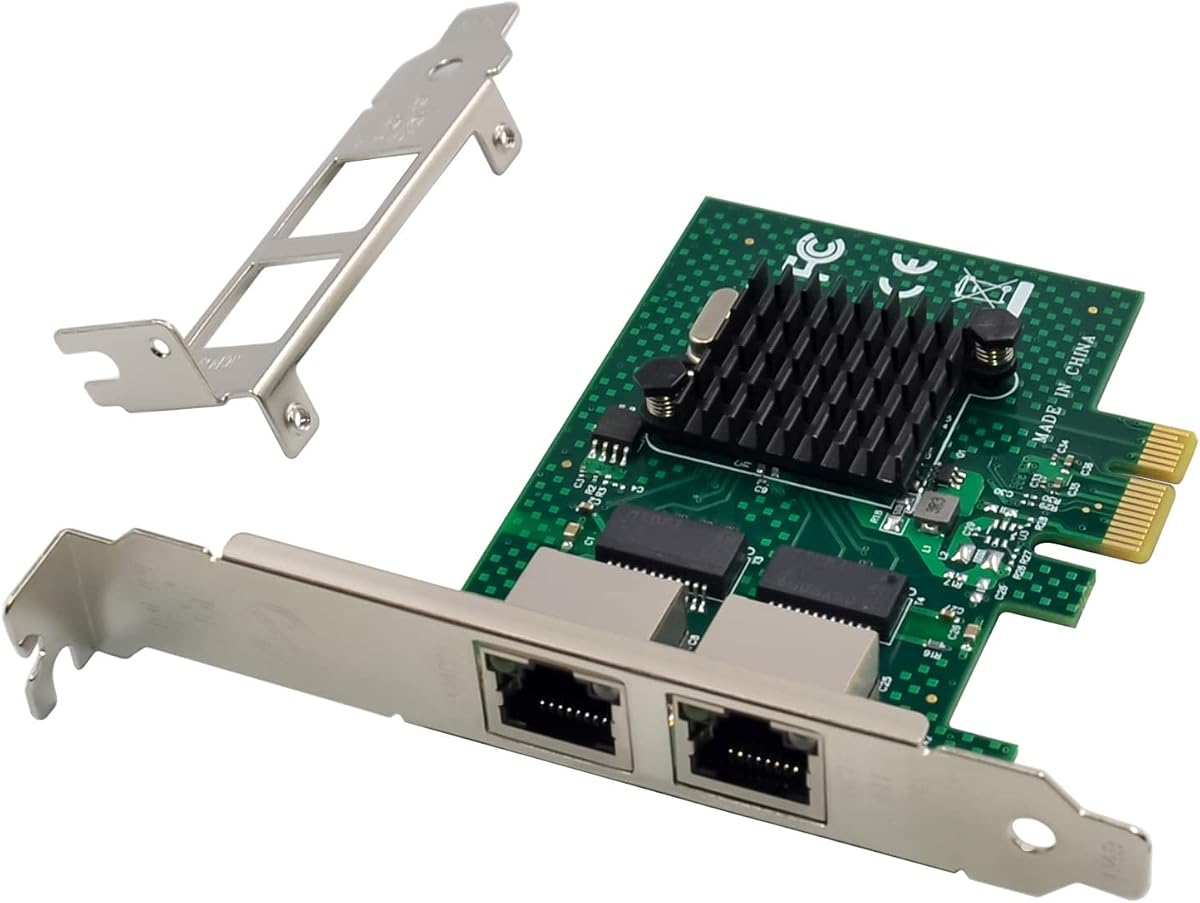
Equipped with an Intel 82576 controller, this adapter delivers stable 1Gb speeds. Rated 4.4 stars, it compares directly to Intel E1G42ET for reliable performance. Intelligent Offloads reduce CPU usage during network tasks effectively.
We may earn a commission when you buy through this link, at no additional cost to you.
It supports Windows Server 2003 through 2012, Linux, and older VMware ESX versions. The PCIe 2.0 x1 lane fits most standard server slots. Includes both standard and low profile brackets for flexible installation.
VMware ESXi 7.0 and above are not supported, limiting use in modern virtualization. Hot swapping is also unavailable, requiring system shutdown. These are minor trade-offs for a solid budget option.
Recommended for servers needing redundant gigabit links without advanced features, this card provides value. Confirm OS compatibility before purchasing to avoid driver issues in newer environments.
Intelligent Offloads optimize network processing, freeing up CPU resources for core server applications.
Includes multiple brackets to fit both standard and slim form factor cases easily.
We may earn a commission when you buy through this link, at no additional cost to you.
This NIC features the Intel 82576 controller with QoS technology for streamlined online experiences. With a 4.5 rating, it is an affordable choice for home and small business servers. Dual RJ45 ports support reliable 10/100/1000Mbps rates.
We may earn a commission when you buy through this link, at no additional cost to you.
It connects via Cat5e cable up to 100 meters, fitting standard network setups. Compatible with Windows 7 through 11, Linux, FreeBSD, and older VMware ESXi versions. Low profile and full-height brackets simplify fitting into various chassis.
Modern VMware ESXi 7.0 and Mac OS are excluded from supported systems. This may limit cloud or Apple-based environments. However, its broad Windows and Linux support covers most general use cases effectively.
Ideal for budget-conscious users needing dependable gigabit redundancy, this card offers great value. Ensure your hypervisor version is compatible if using virtualization platforms.
QoS technology helps prioritize critical data packets for smoother performance during congestion.
Comes with brackets and driver access via QR code, making setup straightforward for all users.
We may earn a commission when you buy through this link, at no additional cost to you.
The Gigaplus X540-T2 delivers up to 10Gb/s with dual independent Ethernet ports. Rated 4.6 stars, it ensures reliable, stable connections to prevent packet loss in busy networks. The X540 controller is a proven workhorse.
We may earn a commission when you buy through this link, at no additional cost to you.
Supports Windows Server 2003 through 2012, Windows 7 to 11, and VMware. The PCIe 2.0 x8 lane interface ensures ample bandwidth. Includes standard and low-profile brackets for versatile deployment across different server types.
This card works only with PCIe slots, not older PCI interfaces. While the price is higher than gigabit options, the speed gain justifies the investment for bandwidth-hungry applications.
Perfect for home data centers requiring fast file transfers, this card offers robust performance. Choose it to upgrade to 10GbE copper networking without changing fiber infrastructure.
Two separate ports allow for redundant connections or aggregated bandwidth configurations easily.
Rigorously tested reliability prevents data loss and ensures consistent uptime in critical environments.
We may earn a commission when you buy through this link, at no additional cost to you.
With the Intel X540-BT2 controller, this premium card offers stable 10Gbps speeds. Rated 4.5 stars, it integrates well with modern servers needing robust networking. QoS technology enhances online experience stability and prioritization.
We may earn a commission when you buy through this link, at no additional cost to you.
Supports Cat6a cables for transition to 10GbE with current infrastructure. Compatible with Windows 7 through 2019, Linux, Ubuntu, and VMware ESXi 6/7. Includes both low profile and full-height brackets for easy installation.
Note that 2.5Gbps and 5Gbps speeds are unsupported, operating only at 10G/1G/100M. Mac OS is also not supported. These specifics ensure focused performance for 10GbE deployments.
Best for premium server upgrades, this card balances high speed with QoS features. Verify cable quality and switch compatibility to maximize the 10G advantage.
Quality of Service technology ensures critical traffic gets priority for smoother application performance.
Designed to work with existing Cat6a cabling, simplifying the transition to faster network speeds.
We may earn a commission when you buy through this link, at no additional cost to you.
This card uses the Intel 82576 controller with PCIe 2.0 x4 lane for reliable gigabit performance. Rated 4.5 stars, it supports SR-IOV for better virtualization efficiency. The alloy heat sink maintains stable operating temperatures.
We may earn a commission when you buy through this link, at no additional cost to you.
Compatible with Windows 7 through 2012, Linux, FreeBSD, and older VMware ESX. PXE remote boot and VLAN filtering make it ideal for server management. It includes a low profile bracket for small form factor cases.
VMware ESXi 7.0 and above are not supported, limiting modern virtual environments. Despite the 1Gbps speed limit, its x4 lane provides headroom for aggregated links. This suits specific enterprise scenarios well.
Recommended for virtualized environments needing SR-IOV and PXE, this card offers specialized features. Check hypervisor compatibility carefully to avoid installation hurdles.
Single Root I/O Virtualization allows multiple virtual machines to share the physical NIC efficiently.
PXE remote boot simplifies network booting for diskless systems and automated provisioning.
We may earn a commission when you buy through this link, at no additional cost to you.
Powered by the BCM5720-2P chipset, this adapter supports x86 and x64 servers effectively. With a 4.6 rating, it is ideal for cloud and enterprise data centers needing reliable gigabit links. It fits PCIe v1.X and v2.X interfaces.
We may earn a commission when you buy through this link, at no additional cost to you.
Compatible with CentOS, Debian, Red Hat, Ubuntu, and various VMware versions including ESXi 5 to 8. Includes low profile brackets for slim servers. Warranty terms cover 180 days with friendly customer service.
This card is capped at 1Gbps, limiting use in high-throughput data centers. However, its broad OS support ensures versatility. It is a dependable choice for standard server networking without specialized needs.
Best for general enterprise or private cloud servers, this card delivers consistent gigabit performance. Ensure your server chassis matches the bracket type for seamless installation.
Supports diverse enterprise Linux distributions, simplifying deployment across mixed environments.
Works with older PCIe v1 and newer v2 interfaces, extending compatibility across legacy and new systems.
We may earn a commission when you buy through this link, at no additional cost to you.
Selecting the right network card requires balancing speed, compatibility, and features for your specific environment. Understanding key technical factors helps avoid mismatches that could impact performance.
The controller determines performance stability and driver reliability. Intel X540 offers 10Gbps speeds, while 82576 suits gigabit needs. Always match the chipset to your server capabilities.
Choose a trusted chipset brand for consistent driver support and minimal downtime.
Ensure the card supports your current OS version, especially for newer releases like Windows 11 or ESXi 8. Some cards exclude latest hypervisors, limiting modern setups.
Verify OS compatibility lists before purchase to avoid installation issues.
Cards vary from PCIe x1 to x16 lanes. Higher speeds like 10Gbps require at least x8 lanes for full throughput. Ensure your motherboard has the correct slot type.
Select a card matching your slot width to maximize bandwidth without bottlenecks.
Dual RJ45 ports typically support Cat5e for 1Gbps or Cat6a for 10Gbps. Ensure your existing cabling meets the card's speed requirements to avoid throttling.
Use high-quality cables to maintain signal integrity at higher speeds.
For virtual environments, look for SR-IOV and iSCSI boot support. These features improve VM network efficiency and simplify storage connectivity.
Prioritize cards with advanced virtualization support if running multiple VMs.
Servers run hot, so alloy heat sinks or passive cooling are vital. Overheating causes packet loss and downtime. Look for cards designed for 24/7 operation.
Choose models with robust heat dissipation for reliable long-term use.
Lifetime technical support and warranty periods like 3 years add peace of mind. Check if drivers are downloadable directly from vendor sites.
Ensure vendor support is accessible for troubleshooting during setup.
Include low profile brackets for small chassis. Ensure the card physically fits without blocking other slots or components.
Measure your case depth before purchasing to guarantee proper installation.
Shut down the computer and ground yourself before installing the card. Insert it firmly into the correct PCIe slot, ensuring it clicks into place. Secure the bracket screws and connect Cat6a cables for 10Gbps or Cat5e for 1Gbps.
Download drivers from the vendor or Intel website if the OS lacks built-in support. In Device Manager or system settings, confirm both ports are detected and enabled. Configure IP addresses or VLANs as needed in network settings.
Periodically update drivers to patch bugs and improve stability. Ensure vents around the card stay clear to prevent overheating. Restart the system if connectivity issues arise after software updates.
Most cards support only specific speeds like 1G or 10G. Models like VIMIN 10G explicitly exclude 2.5G/5G, operating at 1G instead. Check product specs carefully before connecting to intermediate speed switches.
None of the listed cards support hot swapping. You must shut down the system to install or remove the card safely. Always verify physical connections before powering the server back on.
Some older chips lack native Windows 11 drivers, requiring manual setup. Check the product notes for compatibility warnings. Always download the latest driver from the vendor or Intel site.
SR-IOV allows multiple virtual machines to share a physical NIC directly, improving performance. It reduces latency and CPU overhead in virtual environments. Only cards with this feature support it in virtual setups.
Most cards support Windows Server versions, Linux, FreeBSD, and VMware ESXi. However, newer hypervisors may not be supported. Always review the official compatibility list for your exact OS version.
Match the card's lane requirement to your motherboard slot. 10Gbps cards usually need PCIe x8 or x16. Refer to your server manual for slot specifications and ensure space availability.
This guide covered ten top dual RJ45 port network cards ranging from gigabit to 10Gbps speeds. Each offers distinct advantages depending on your server needs, OS environment, and budget constraints.
Prioritize controller stability and OS compatibility to ensure smooth integration. Features like SR-IOV and thermal design matter most for virtualized or always-on systems.
Verify current prices and stock before purchasing, as they fluctuate regularly. Confirm your motherboard slots and existing cabling match the card requirements for hassle-free installation.